

Booking a one-way ticket gives travelers more flexibility, especially for long-term travel, digital nomad trips, relocation plans, backpacking routes, or open-ended international journeys. But many travelers forget one important detail while planning these trips — insurance.
One way flight insurance works differently from traditional round-trip coverage because insurers often treat open-ended travel as a higher risk. Some policies only cover the flight itself, while others include medical emergencies, delays, cancellations, or lost baggage connected to the journey.
Understanding how flight insurance one way policies work can help travelers avoid paying for coverage they do not actually need while still protecting themselves from expensive disruptions.
This guide explains how one way flight insurance works, what it usually covers, when it makes sense to buy it, and how to choose the right policy for your travel style.
Why Travelers Buy One Way Flight Insurance
One-way tickets are common for:
- long-term travel
- working holidays
- international relocation
- study abroad trips
- digital nomad travel
- immigration travel
- extended backpacking routes
Unlike standard vacations, these trips often involve uncertain return dates. That creates different insurance needs compared to traditional round-trip travel.
Many travelers buy insurance for one way flight protection because unexpected problems can still happen before departure or during transit, including:
- canceled flights
- missed connections
- medical emergencies
- baggage delays
- airline schedule changes
Tip: Some countries may also require proof of travel insurance before allowing entry on long-term visas or one-way arrivals.
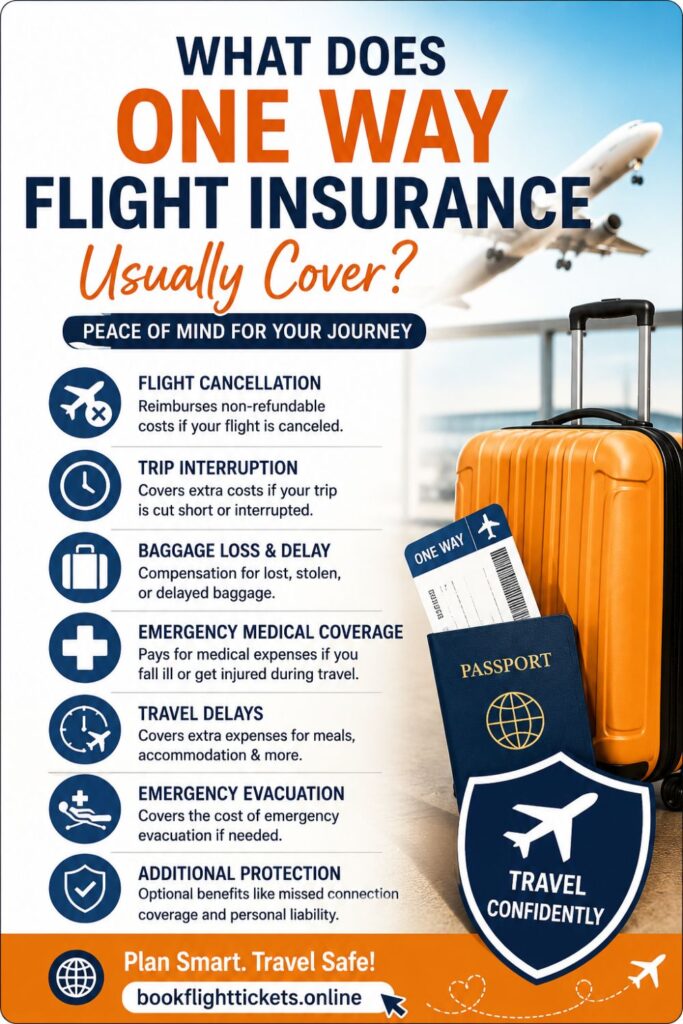
What Does One Way Flight Insurance Usually Cover?
Coverage of the flight insurance depends heavily on the provider and policy type.
Some plans only protect the flight itself, while others combine flight protection with broader travel insurance benefits.
Common coverage areas include:
- flight cancellation
- trip interruption
- baggage loss
- baggage delays
- emergency medical care
- missed departures
- emergency evacuation
Not every policy includes all these features, so travelers should read the coverage details carefully before booking a flight.
Travel Insurance for One Way Flight Trips
Travel insurance for one way flight journeys is often more useful than basic airline protection because it covers situations beyond the ticket itself.
For example, if a traveler books a one-way ticket from Paris to Bangkok and experiences:
- a medical emergency before departure
- delayed baggage on arrival
- canceled connecting transport
- emergency hospitalization abroad
travel insurance may provide broader financial protection than airline compensation alone.
This becomes especially important for:
- solo travelers
- international students
- remote workers
- travelers changing countries frequently
Tip: Many insurers ask for an estimated trip duration even if you do not yet have a return ticket.
Insurance for One Way Flight Tickets vs Airline Protection
Many airlines offer optional insurance during checkout, but travelers should compare this carefully with independent providers.
Airline add-on insurance often focuses mainly on:
- ticket cancellation
- flight delays
- missed departures
Independent travel insurance policies may include:
- medical coverage
- emergency evacuation
- lost passports
- theft protection
- accommodation disruptions
The cheaper airline option is not always the better value if your trip lasts several weeks or months.
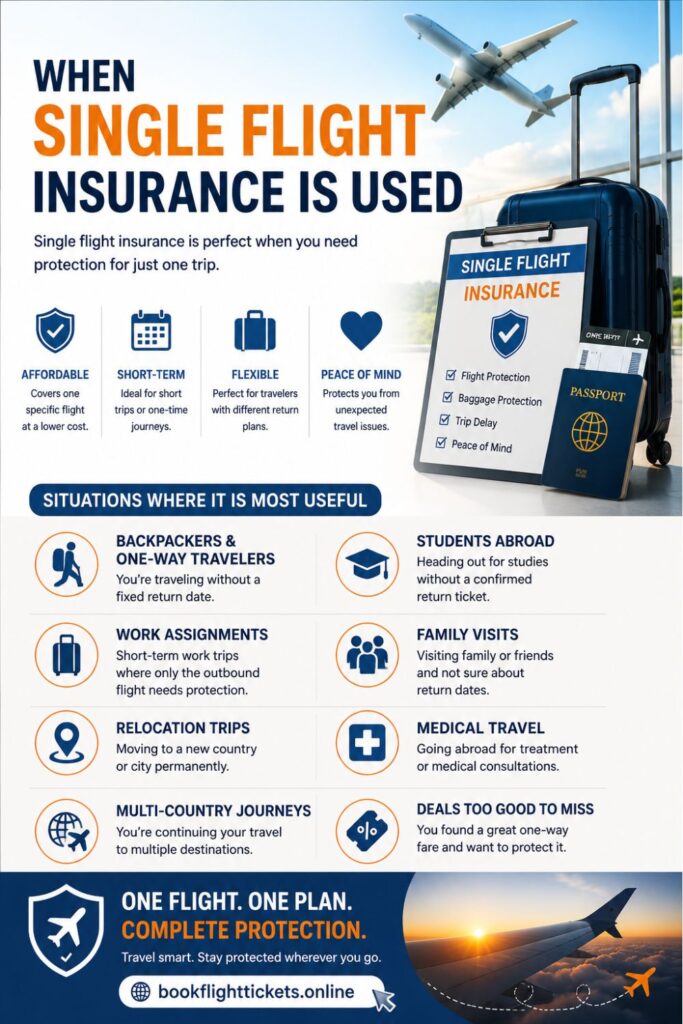
When Single Flight Insurance Is Used
Single flight insurance is designed for travelers who only want coverage for one specific journey instead of a full multi-trip or annual insurance plan.
This type of policy usually works well for:
- short international flights
- one-time vacations
- relocation flights
- emergency family travel
- travelers already covered medically elsewhere
Coverage often starts shortly before departure and ends after arrival or within a limited travel period.
Single flight insurance may include:
- cancellation reimbursement
- baggage protection
- delay compensation
- missed connection support
However, some single-flight policies exclude medical treatment abroad, so travelers should verify this carefully.
Tip: Single-flight coverage is often cheaper than comprehensive travel insurance, but the protection is narrower.
Is Just Flight Insurance Enough?
Just flight insurance can work for certain travelers, but it depends on the trip.
Travelers sometimes choose just flight insurance when:
- the journey is short
- medical insurance already exists
- accommodation is refundable
- the trip budget is low
- only flight cancellation matters
But relying only on basic flight protection can become risky during international trips where medical emergencies or baggage problems create larger expenses.
For example:
- a canceled flight may cost €300
- emergency medical treatment abroad may cost thousands
That’s why many long-term travelers prefer broader travel insurance even for one-way routes.
When Flight Insurance One Way Coverage Makes the Most Sense
Flight insurance one way policies are especially useful in situations where travelers cannot easily replace the cost of disruptions.
Relocation Travel
People moving abroad for:
- work
- family
- education
- immigration
often carry more luggage and face stricter schedules.
A major delay or baggage issue during relocation can become expensive quickly.
Student Travel
International students frequently travel on one-way tickets before arranging return plans later.
Insurance helps protect:
- electronics
- documents
- medical emergencies
- delayed arrivals
Digital Nomad Travel
Remote workers traveling without fixed return dates often prefer flexible one-way travel arrangements.
Insurance becomes important because:
- plans change often
- equipment is valuable
- medical systems vary by country
Backpacking Trips
Long backpacking journeys across multiple countries create more opportunities for delays, missed flights, or theft.
Basic airline compensation may not be enough during multi-country travel.
What One Way Flight Insurance Usually Does NOT Cover
Travelers should understand exclusions before buying any policy.
Common exclusions may include:
- pre-existing medical conditions
- extreme sports
- intoxication-related incidents
- visa denials
- unattended baggage
- political unrest in some regions
Some insurers also reduce coverage for travelers without confirmed return dates.
Tip: Read the emergency medical coverage section carefully. Limits and exclusions vary dramatically between providers.
How Much Does Insurance for One Way Flight Travel Cost?
Pricing for flight insurance one way depends on:
- traveler age
- destination
- trip duration
- coverage limits
- medical coverage
- baggage value
Basic just flight insurance may cost only a small percentage of the ticket price.
Comprehensive travel insurance for one way flight trips becomes more expensive when:
- medical coverage increases
- multiple countries are involved
- trip length becomes uncertain
Travelers over 60 often pay higher premiums due to increased medical risk.
Tips for Choosing the Right Policy
Choosing the cheapest policy is not always the smartest decision.
Compare Medical Coverage Limits
International medical treatment can become extremely expensive, especially in:
- the United States
- Canada
- Japan
- Switzerland
Check Baggage Protection Carefully
Travelers carrying:
- laptops
- cameras
- drones
- work equipment
should verify coverage limits for electronics.
Verify Airline Delay Compensation
Some policies only activate after long delays, such as:
- 6 hours
- 12 hours
- overnight disruptions
Understand Cancellation Rules
Not every cancellation reason qualifies for reimbursement.
Tip: Flexible policies are especially useful for travelers booking uncertain long-term trips.
When You May Not Need One Way Flight Insurance
Some travelers already receive protection through:
- premium credit cards
- employer insurance
- student programs
- national health systems
- airline loyalty programs
Still, travelers should confirm exactly what is covered internationally before skipping insurance completely.
A surprising number of travelers assume they are protected abroad when they are not.
Travel Insurance for One Way Flight is Important
One way flight insurance becomes more important when trips are flexible, international, or open-ended. Travelers using one-way tickets often face more uncertainty than standard vacation travelers, which makes protection against delays, cancellations, baggage problems, and medical emergencies much more valuable.
For some travelers, just flight insurance is enough. For others — especially long-term travelers, students, or digital nomads — broader travel insurance for one way flight journeys usually provides better protection and peace of mind.
The best approach is matching the policy to the actual type of trip instead of automatically choosing the cheapest option.

