
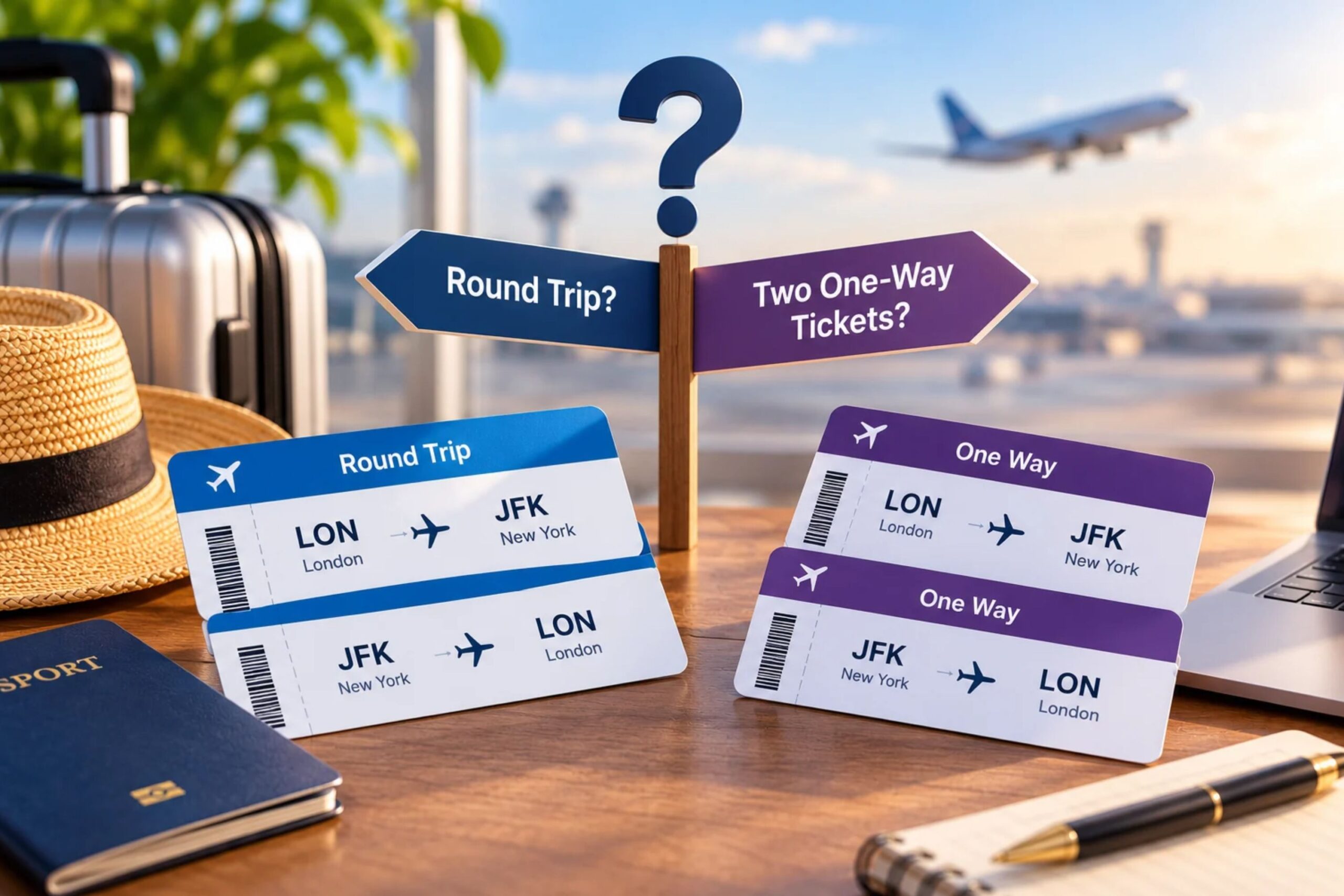
The main difference between a round-trip ticket and two one-way tickets is how you book your outbound and return journeys. A round-trip ticket combines both flights into one booking, while two one-way tickets let you buy each direction separately.
Neither option is always cheaper. The better choice depends on the route, airlines, travel dates, baggage requirements and ticket conditions.
A round-trip booking may offer a lower combined fare on some routes. Two one-way tickets can offer more flexibility if different airlines offer better prices in each direction or if you want to depart from and return to different airports.
| Factor | Round-trip ticket | Two one-way tickets |
| Pricing | May offer a lower combined fare | Allows separate price comparisons |
| Airline choice | Often uses the same airline or booking arrangement | Can combine different airlines |
| Travel dates | Both directions are selected together | Each direction can be selected independently |
| Changes and cancellations | Depends on the fare rules for the booking | Each ticket may have separate conditions |
| Baggage and extras | Check the conditions for each flight | Allowances and fees may differ by airline |
| Best suited for | Travellers with a defined return journey | Travellers who want more control over each leg |
Is It Cheaper to Book Two One-Way Flights or a Round Trip?
The only reliable way to know is to compare the total prices for the same journey and dates. A round-trip ticket can cost less than two separate bookings, but separate one-way fares may be cheaper when airlines price each direction differently.
For example, imagine you need to fly from City A to City B and return one week later. One airline may offer a competitive return fare, while another may have a cheaper outbound flight, and a third may offer a lower return fare.
Consider this illustrative comparison:
| Booking option | Outbound | Return | Total |
| Round-trip ticket | Included | Included | $360 |
| Two one-way tickets | $145 | $175 | $320 |
| Two one-way tickets on another combination | $130 | $210 | $340 |
In this example, two one-way tickets save $40 compared with the round-trip fare. These figures are illustrative, not current fares, and the result could be different on another route.
For a fair comparison, include baggage, seat selection, booking fees and any other extras you need. A cheaper base fare may cost more once you add the services included in the alternative ticket. What airlines charge extra for varies by fare and carrier, so compare the final amount, not just the advertised fare.
When Is a Round-Trip Ticket the Better Choice?
A round-trip ticket is often worth considering when your travel dates are fixed, and one airline offers a competitive price for the complete journey.
It can be a practical choice in these situations:
- The combined fare is lower. The return booking costs less than purchasing the same flights separately.
- You want a single booking reference. Both directions are managed under one reservation, although the exact ticketing arrangements still matter.
- You prefer consistent conditions. Booking both flights through the same airline may make it easier to check baggage, change and cancellation rules.
- You have a fixed itinerary. You already know when you will return and do not need separate booking flexibility.
- You want fewer booking steps. Selecting both flights together can make it easier to review the itinerary and total cost before payment.
A round-trip ticket does not automatically guarantee better protection if a flight is disrupted. The consequences of delays, cancellations and missed connections depend on the ticket, itinerary and applicable conditions.
Before booking, compare non-refundable and refundable tickets to see how the fare type affects your options if your plans change.
When Are Two One-Way Tickets Better?
Two one-way tickets can be a better option when you find lower fares for each direction separately or need different airlines for your outbound and return journeys.
Consider separate tickets when:
Different airlines offer better fares. One carrier may be cheaper for the outbound journey, while another offers a lower return fare. Compare the combined cost rather than choosing one airline for convenience alone.
Your return date may change. Separate tickets let you compare return options independently, though changing a purchased ticket may still incur fees or require you to pay the fare difference.
You want different airports. You might fly into one city and return from another. This can suit multi-city trips, but compare ground-transport costs and each flight’s price.
One direction has limited availability. You may find a suitable outbound fare with one airline and a better return option elsewhere.
You are comparing one-way promotions. A special fare may apply to one direction only, making separate bookings worth checking.
However, two one-way tickets create separate booking arrangements. Each may have its own payment confirmation, baggage rules, change conditions and cancellation policy. Make sure you understand the terms before purchasing.
For travellers planning a one-way journey rather than a return trip, a one-way ticket option may be more suitable than paying for a return journey they do not need.
What Are the Risks of Booking Two Separate One-Way Tickets?
Separate tickets offer more choice, but the lowest combined price isn’t the only factor.
Different change and cancellation rules
Each ticket follows its own fare conditions. One flight may allow changes for a fee, while the other may have stricter restrictions. If you need to cancel, the flight ticket refund policy can help you identify the conditions that determine whether a refund is available.
Different baggage allowances
Airlines may include different baggage allowances in their base fares. One ticket may include checked baggage, while the other charges extra. When comparing low fares, check the cost of adding baggage when booking cheap tickets so the final totals reflect what you need to carry.
Separate customer support arrangements
If you need to change or cancel one flight, you may need to contact a different airline or booking provider. This can add time and complexity, especially if you purchased through third parties. The choice between booking directly or through a travel agent can affect who manages your changes and which service terms apply.
More complicated itinerary changes
If the outbound flight changes, your separate return booking may not be adjusted automatically. You need to review each reservation and make any necessary changes yourself.
Different payment and refund timelines
If you cancel one booking, its refund or travel credit may be handled separately from the other ticket. Do not assume that the same policy or processing time applies to both.
These risks do not make separate tickets a poor choice by default. They mean you should compare the flexibility and total cost alongside the advertised fare.
How to Compare Round-Trip and One-Way Prices Correctly
To determine which option offers better value, compare equivalent itineraries and include the costs that affect your actual travel plans.
1. Search the same travel dates. Compare the same outbound and return dates, airports and passenger count.
2. Compare the same flights where possible. If you are comparing different airlines, check departure times, arrival times, connections and total journey duration.
3. Calculate the full price. Include baggage, seat selection, booking fees and other required extras.
4. Review the ticket conditions. Check cancellation terms, change fees, refundability and restrictions on travel credits.
5. Compare the booking arrangements. Check whether both flights appear in one booking or are issued as separate tickets, and identify which provider handles changes.
6. Consider your flexibility. If your return date may change, compare the cost of changing each option instead of looking only at the initial price.
Flight comparison sites can help you compare available fares across providers. Once you find a promising option, confirm the final price and ticket conditions on the booking page before paying.
Should You Book Both Flights at the Same Time?
If you already know your return date, compare round-trip and separate one-way options before completing either booking. This gives you a clearer picture of the total cost and helps you avoid buying an outbound ticket before checking the return fare.
If your dates are flexible, compare several combinations. A slightly different departure or return date may lower the total price, but make sure the alternative still fits your plans.
For international journeys, check entry requirements, transit arrangements and travel-document requirements before committing to non-refundable tickets. Your ticket choice also matters if your plans may change, so compare the conditions for flexible tickets for international flights before deciding which booking structure to use.
How to Choose the Best Booking Option for Your Trip
The right choice depends on the price difference, the flexibility you need and how much complexity you are willing to manage.
Choose a round-trip ticket when it offers a lower total price, your dates are fixed, and its conditions meet your needs.
Choose two one-way tickets when separate fares produce meaningful savings, different airlines suit each direction, or your itinerary requires different departure and arrival points.
Before paying, compare the final totals and review each ticket’s rules. A small price difference may not justify managing separate reservations, while a substantial saving may make the extra work worthwhile.
FAQs
Can I book the outbound flight now and the return flight later?
Yes, you can buy a one-way ticket and book your return separately later. However, the return fare may increase or availability may change, so compare the likely cost of both directions before booking only the outbound flight.
Can you book two one-way tickets with different passenger details?
Each booking has its own passenger information, but the details must match the relevant travel documents and airline requirements. If you are booking for several travellers, check that names and other required information are correct on both tickets.
Do two one-way tickets earn more frequent-flyer miles than a round-trip ticket?
Not necessarily. Miles and points depend on the airline’s loyalty programme, fare type, ticket eligibility and distance or spending rules. Compare the earning conditions for the specific flights rather than assuming that separate bookings earn more.
Can I use different payment methods for the outbound and return flights?
Often, yes, if the airlines or booking providers accept the payment methods you want to use. Each one-way booking is processed separately, so payment options, currencies, fees and refund procedures may differ.
Is a round-trip ticket required to enter a country?
Entry requirements vary by destination, nationality, visa status and travel circumstances. Some authorities or carriers may require evidence of onward or return travel, while others apply different rules. Check the official entry requirements for your destination before booking a one-way journey.