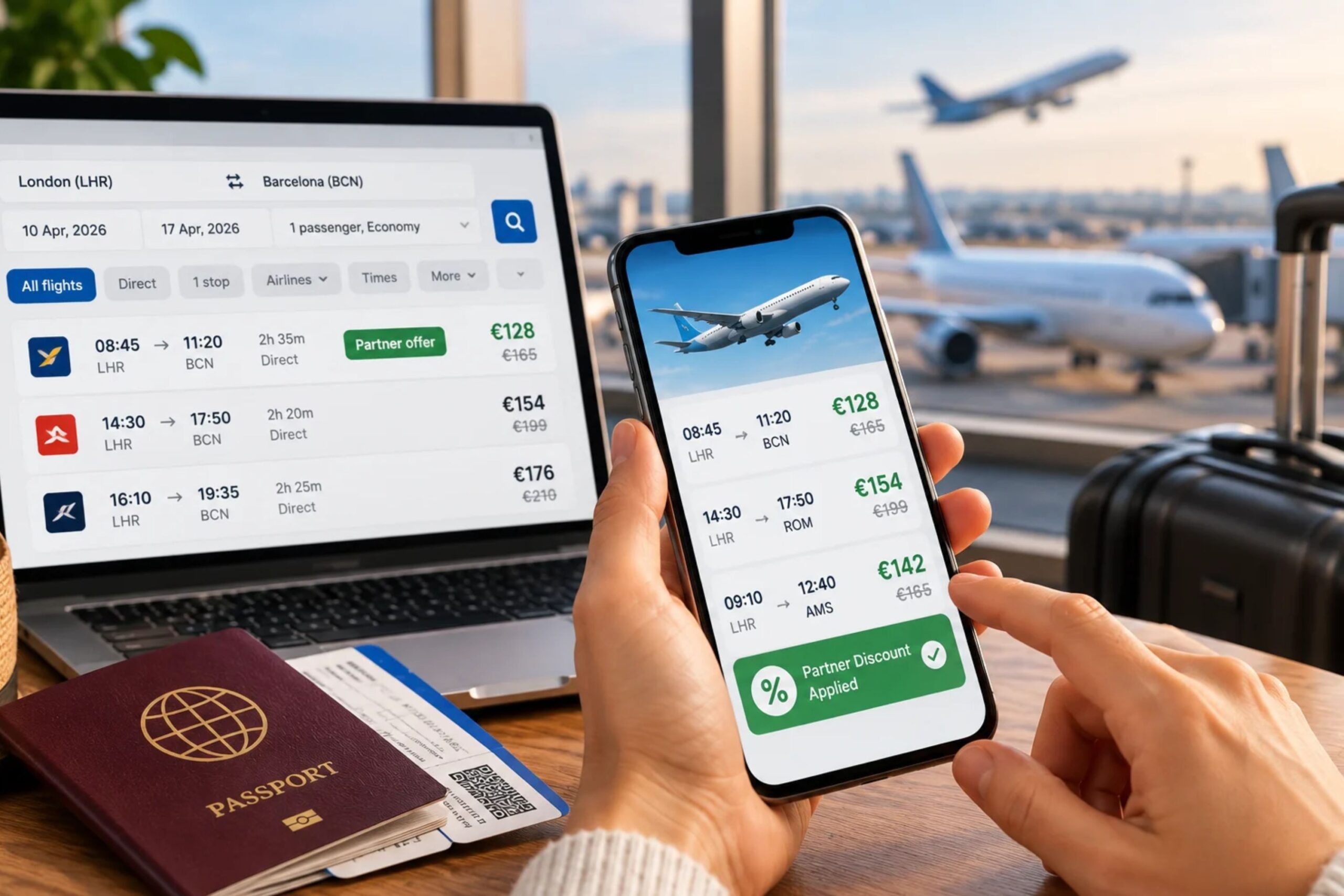

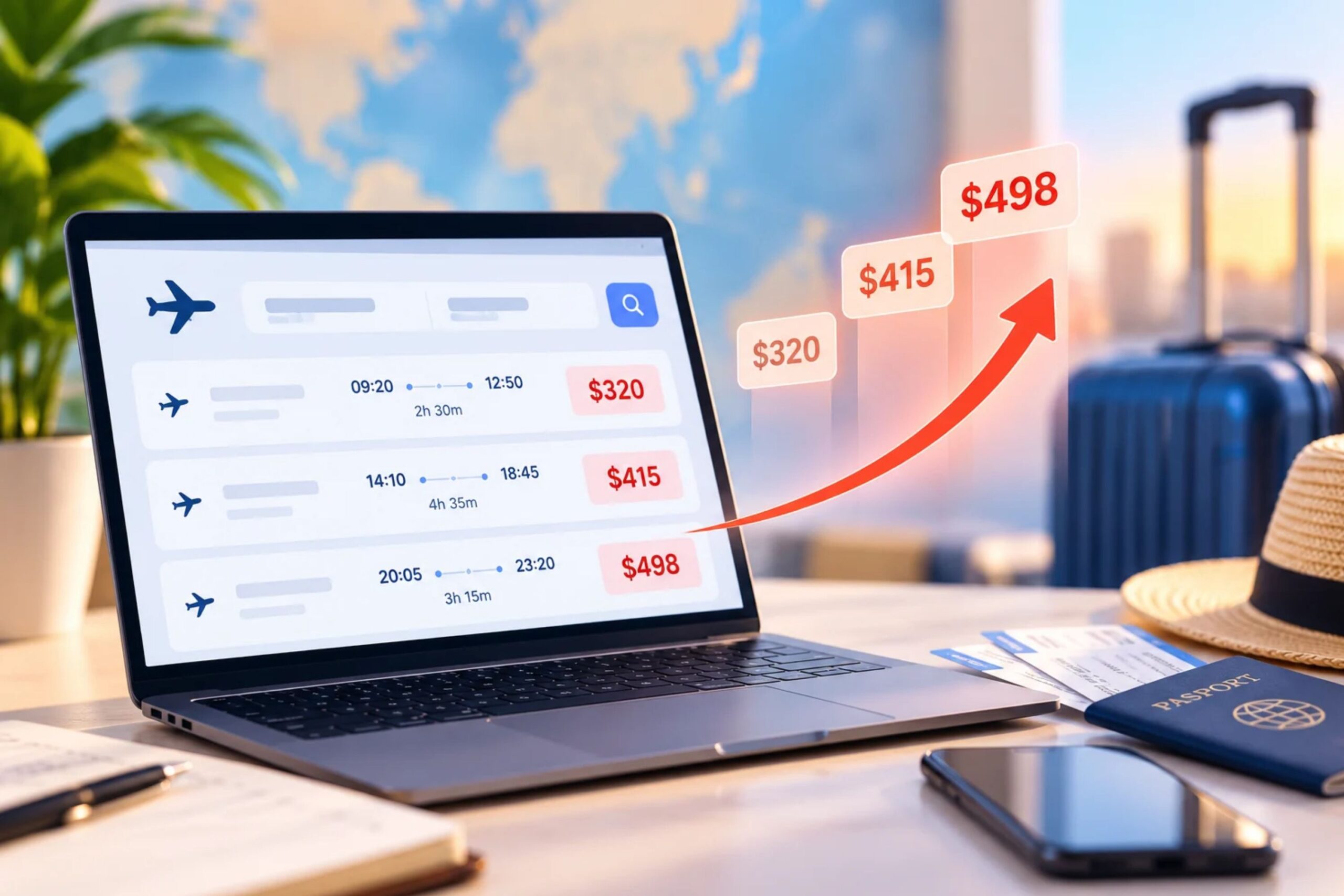
Flight prices can change between searches because airlines update fares as seat availability, booking demand, and pricing conditions shift. If you search the same route again and see a higher price, the timing can make it seem like your searches caused the increase.
There is no solid evidence that repeatedly searching for a flight automatically makes the fare more expensive for you. The change may reflect a fare category selling out, an updated price from an airline or travel agent, or a difference between the results displayed and the price available when you book.
Airfares can also decrease. A higher price on your second search doesn’t guarantee the fare will keep rising, just as a lower price doesn’t guarantee further savings.
Do Flight Prices Increase After Multiple Searches Because of Cookies?
Repeated searches don’t automatically trigger higher flight prices, and clearing browser cookies doesn’t guarantee a cheaper fare. Cookies commonly store information such as website preferences, session details, and previously selected search options, but their presence alone does not prove a website is raising prices.
Flight comparison sites and airlines can use different systems to manage searches, display results and update fares. Their practices may vary, so don’t assume every website handles pricing the same way.
If you see a higher price after searching several times, consider other explanations first:
- The fare changed: The airline may have updated the price since your previous search.
- The cheapest seats are no longer available: Another traveller may have booked the last seat in a lower fare category.
- The previous result was outdated: A cached result or delayed update may show a price that is no longer available.
- The booking conditions differ: The new result may include different baggage, refund or change conditions.
- The final price includes additional charges: Fees or optional services may appear later in the booking process.
The best approach is to compare the same itinerary and fare conditions rather than assume your browsing history caused the increase.
How Airline Dynamic Pricing Changes Flight Fares
Airline dynamic pricing lets carriers adjust fares based on demand, available seats, booking patterns, and other commercial factors. Airlines may offer different prices for seats on the same flight, even within the same cabin.
For example, an airline may initially offer a limited number of economy seats at a lower fare. When those seats sell, the next available fare category may cost more. The aircraft and departure time remain the same, but the lowest price is no longer available.
Prices can also change as an airline updates its demand forecasts or responds to market conditions. A fare may rise during a busy booking period and fall later if the airline adjusts its pricing or makes additional inventory available.
These changes help explain why flight prices can move between searches without any direct connection to an individual traveller’s browsing behaviour. The wider pricing mechanism is known as dynamic pricing for airlines.
Why Does the Same Flight Cost More When I Return to Book?
The same flight can cost more when you return to a booking page because the earlier price may no longer be available. However, several details can explain the difference, and not every price change means the base fare has increased.
The cheaper fare category sold out
Airlines can make a limited number of seats available at each fare level. If other customers buy the cheapest seats while you compare options, the next available fare may be higher.
The displayed price was outdated
Flight search engines retrieve information from airlines and booking partners. Prices and availability can change before the results refresh or before you reach the payment page.
The booking details changed
A small difference in your search can affect the result. Before comparing prices, check the departure date, passenger count, cabin, baggage allowance, airport, and ticket conditions.
Additional fees appeared during checkout
Some fares exclude checked baggage, seat selection or other optional services. A booking can therefore cost more at checkout even if the advertised base fare has not changed.
To identify the cause, compare the full itinerary with the final amount due. The lowest advertised fare isn’t always the cheapest option once baggage, fees, and ticket restrictions are included.
Does Incognito Mode Make Flight Prices Cheaper?
Incognito mode usually doesn’t make flights cheaper because it doesn’t control the airline’s fare inventory or pricing system. It limits the browsing data saved locally during a private session, but it cannot restore a sold-out fare or reverse an airline’s price update.
Private browsing can still be useful when you want to separate sessions, avoid using a saved login or check whether a website is displaying information from an earlier session. However, don’t treat it as a reliable way to reduce airfare.
Switching browsers, devices or networks is also unlikely to help if the airline has changed the fare for everyone. If two searches show different prices, compare them at roughly the same time and check the same booking conditions before drawing conclusions.
How to Check Whether a Flight Price Has Really Increased
A simple comparison can help you distinguish an actual fare change from a difference in search results.
- Repeat the same search. Use the same airports, dates, passenger count, cabin and flight times.
- Compare the exact flight. Check the airline, flight number, connections and total journey duration.
- Review the fare conditions. Confirm baggage allowances, refund rules, change fees and other included services.
- Check the airline’s website. Compare the price directly with the airline’s offer for the same itinerary and fare.
- Review the final amount. Include mandatory charges and any extras you need rather than relying on the initial result.
- Record the price and time. If you are monitoring a fare, note when you checked it so you can compare changes accurately.
You can also use flight comparison sites to compare offers from multiple booking providers. Check the final price with the seller before paying because comparison results may not reflect the latest available fare.
How to Track Flight Prices Without Repeatedly Searching
You do not need to refresh a flight search every few hours to monitor its price. Price tracking tools can help you follow changes over time and decide when to review a fare.
Useful options include:
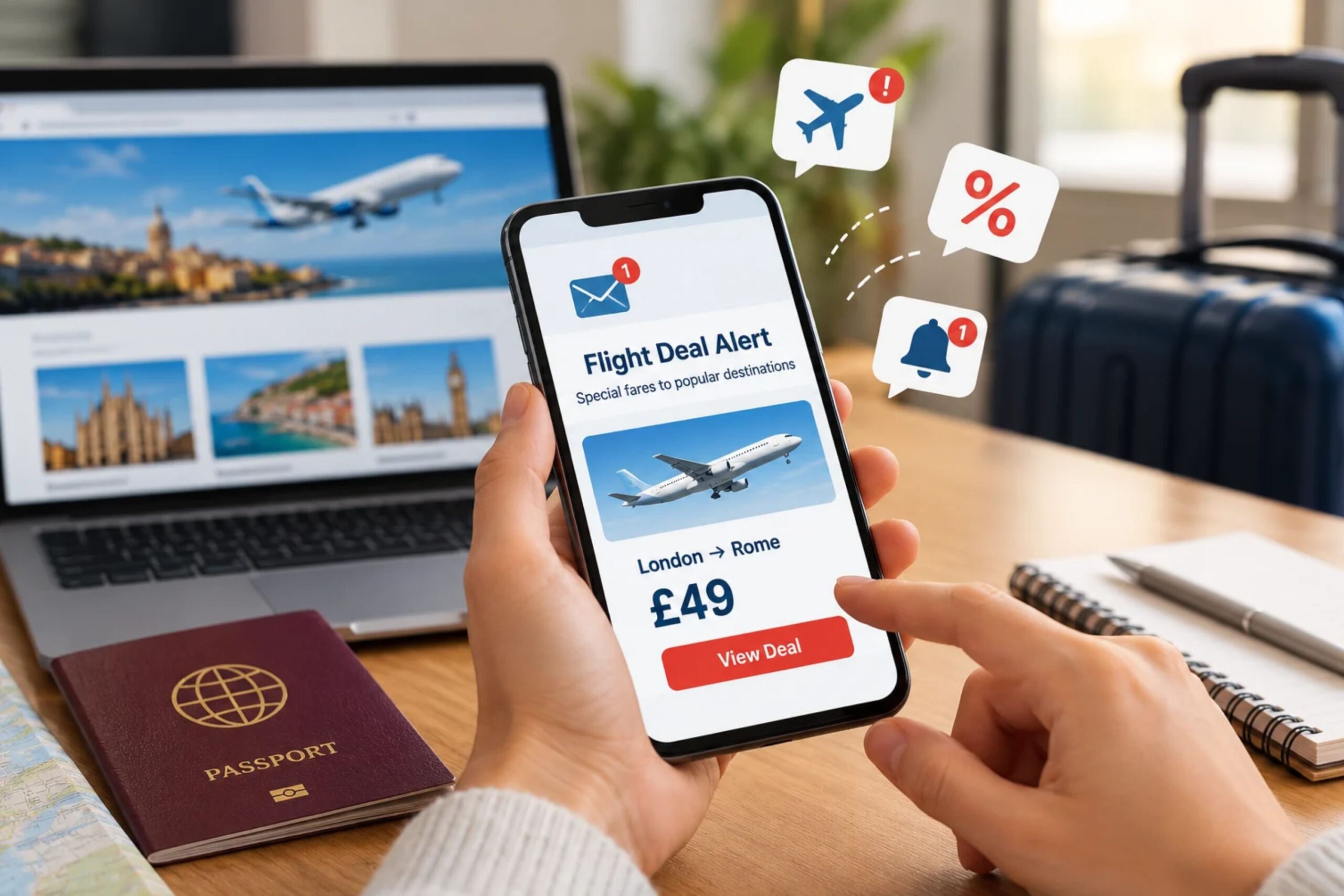
- Price alerts: Receive notifications when a tracked flight’s price changes.
- Saved searches: Return to the same route and dates without rebuilding the search each time.
- Flexible-date searches: Compare nearby departure or return dates to identify lower fares.
- Regular price checks: Review the same itinerary at consistent intervals and record changes.
- Direct airline checks: Verify a lower fare is still available before completing your booking.
A price alert does not reserve a seat or guarantee that the displayed fare will remain available. It simply helps you notice changes without having to search manually as often. The steps on how to track flight prices can help you set up a more consistent monitoring process.
What to Do When Your Flight Price Suddenly Goes Up
If a flight becomes more expensive while you are deciding whether to book, don’t assume you must buy immediately. First, confirm that the fare has genuinely changed and that the new price applies to the same itinerary.
Then compare the available options:
- Check whether the airline still offers the earlier fare.
- Compare nearby departure dates if your plans allow flexibility.
- Review alternative airports or connecting flights where practical.
- Check the total cost of a different fare type, including baggage and change fees.
- Review the price history or alerts available for your route.
- Decide whether the current fare fits your budget and travel requirements.
If your travel dates are fixed and the current fare is acceptable, waiting for a lower price carries some risk. If your dates are flexible, comparing alternatives may reveal a better option. There is no universal rule that fares will rise or fall after a particular number of searches.
FAQs
Can an airline see how many times I searched for a flight?
Websites may collect usage data, and airlines can analyse overall booking activity and demand. However, the collection of search data does not by itself prove that an airline uses your individual search count to raise your fare. Pricing practices vary by provider.
Why is the same flight cheaper on my phone than on my computer?
The difference may result from searches made at different times, different currencies, cached information, booking-provider offers or variations in the displayed fare. Compare the same itinerary and final checkout price on both devices before assuming the device itself caused the difference.
Can a flight price change while I am entering passenger details?
Yes. The fare or seat availability may change before the booking is completed. A price shown in search results is not necessarily guaranteed until the booking provider confirms the fare under its booking conditions.
Does a price alert guarantee that I can book at the notified price?
No. An alert reports a price change detected by the tracking service, but the fare may change again or sell out before you book. Verify the current price with the airline or booking provider before making a payment.
Should I wait if a flight price drops after increasing?
A price drop doesn’t guarantee the fare will keep falling. Consider your departure date, flexibility, budget and the fare’s recent movement. If the current price is acceptable and your plans are fixed, waiting may expose you to a later increase.