
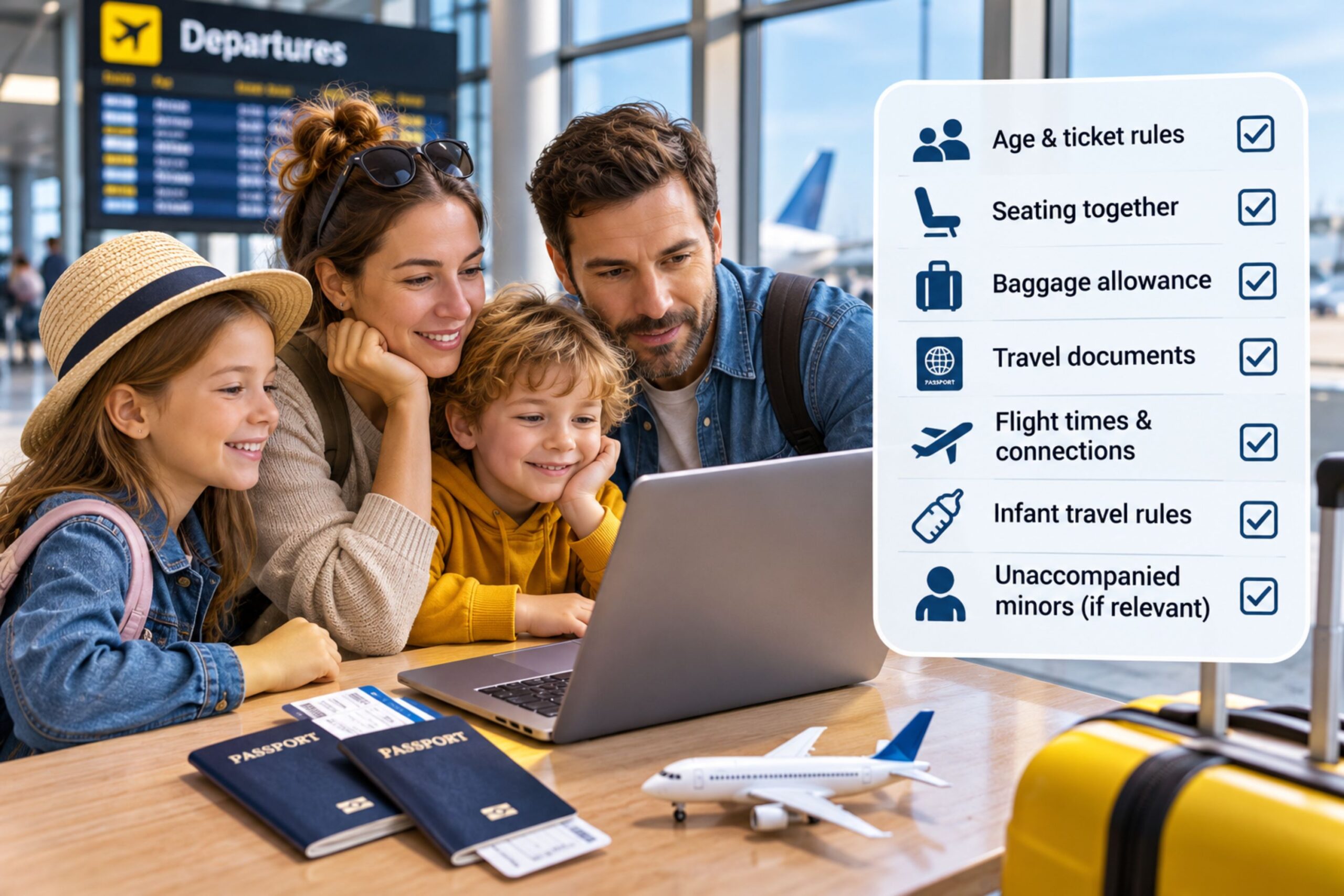
Before booking flights for children, check age-based fares, seating arrangements, baggage allowances, travel documents and airline restrictions. These conditions vary between airlines and can affect the total ticket price and travel arrangements.
A child travelling on an infant fare may not receive a separate seat. A discounted ticket may also have different baggage or change conditions. Check the rules for every passenger before paying.
1. Check Age-Based Ticket Rules
Airlines distinguish between infants, children and adults, but their age categories and fare conditions differ.
Many airlines allow infants under two to travel on an adult’s lap for a reduced fare. Others offer a separate seat at an additional cost. Children above the airline’s infant age limit generally need their own seat.
Check:
- The minimum age for infants travelling by air.
- The age limit for infant fares.
- The cost of a separate infant seat.
- Whether the child’s age is assessed on the departure date or another specified date.
- Rules for connecting flights operated by different airlines.
Airlines apply different infant fares depending on the child’s age and ticket conditions. Before booking, check the airline’s age requirements and rules for children flying free, as infants travelling on an adult’s lap may still incur taxes or additional charges.
2. Compare the Total Fare for Every Passenger
A child discount does not necessarily make a booking cheaper. Compare the final price for all passengers, including:
- Adult and child ticket prices.
- Infant charges and taxes.
- Cabin and checked baggage.
- Seat-selection fees.
- Booking and payment charges.
- Additional services required for the journey.
Some airlines charge children occupying their own seats the same fare as adults. Others offer child discounts on selected routes or fare types.
Compare the total booking cost, not the advertised starting price.
3. Check Family Seating Rules
Do not assume that booking tickets together guarantees that children will sit beside their parents.
Check the airline’s policy on:
- Seating children next to accompanying adults.
- Advance seat selection.
- Charges for adjacent seats.
- Seating arrangements for infants.
- Bassinet availability on long-haul flights.
If sitting together is important, review the seat map and family seating policy before paying.
Families travelling with infants should also check bassinet restrictions. Availability may depend on aircraft configuration, seat location and the infant’s size. A request does not guarantee a bassinet.
4. Confirm Baggage and Child Equipment Allowances
Baggage allowances may differ between infants and children. Check the conditions for every passenger, including:
- Personal items and cabin bags.
- Checked baggage.
- Strollers and pushchairs.
- Car seats and child restraint systems.
- Other infant equipment.
Some airlines transport strollers and car seats free of charge, while others apply size restrictions or require advance arrangements.
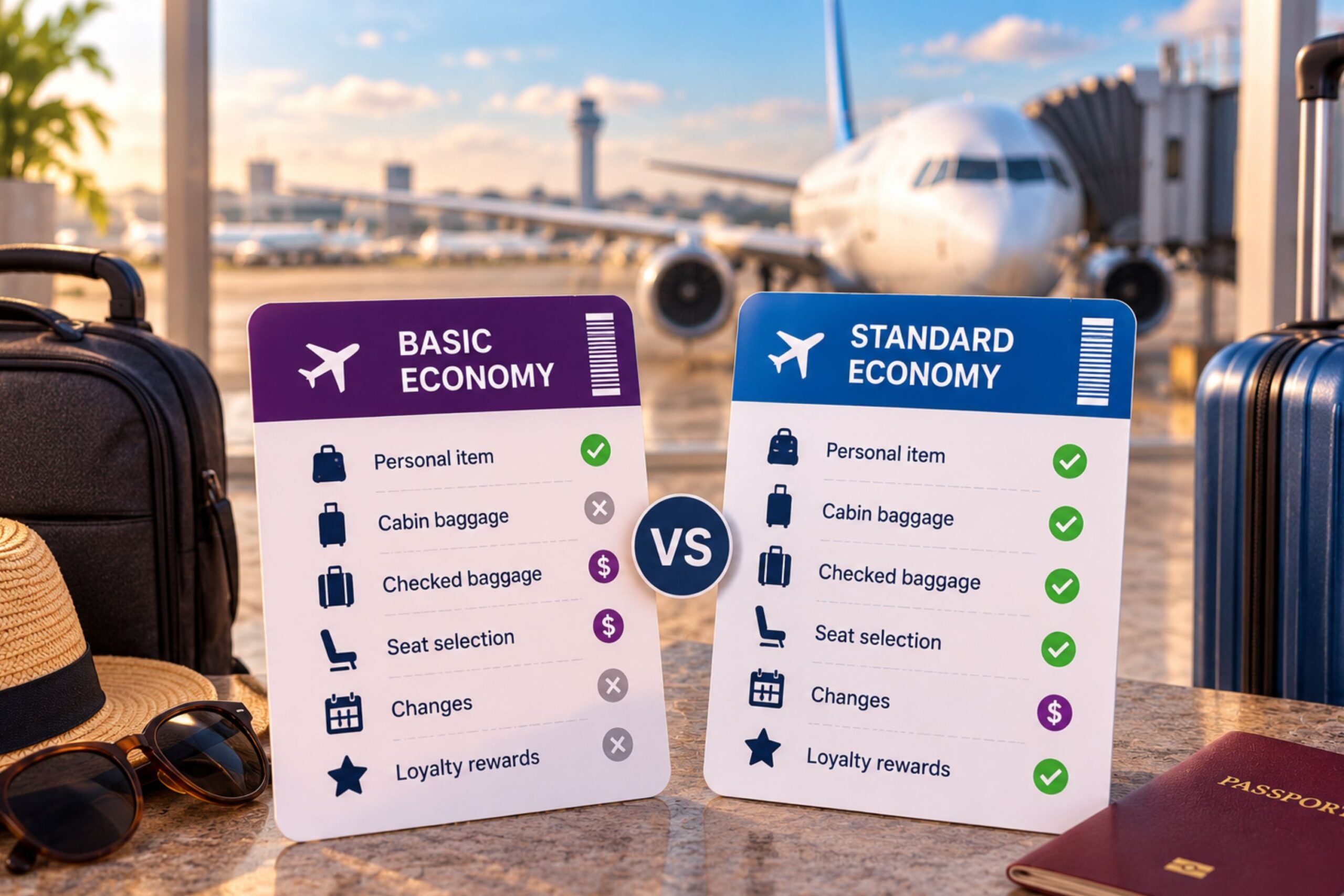
Check the cabin baggage allowance carefully. A basic fare may include only a small personal item, not a full-size cabin bag. If you need additional luggage, compare the cost of adding baggage when booking cheap tickets.
If you plan to bring a car seat, confirm that the airline accepts its model and dimensions for onboard use.
5. Verify Children’s Travel Documents
Children need their own travel documents when the destination and route require them.
Before booking an international flight, check:
- Passport requirements for each child.
- Visa or electronic travel authorisation requirements.
- Passport validity rules.
- Transit documentation.
- Parental consent requirements when a child travels with one parent or another adult.
- Name and date-of-birth accuracy.
Some countries require additional documentation for minors travelling without both parents. Requirements depend on the child’s nationality, destination and circumstances.
Check the official entry requirements for every country on the itinerary before purchasing tickets. Always check how to book an international trip for other international booking considerations.
6. Compare Flight Times and Connections
A flight’s departure time and connection arrangements can matter as much as its price when travelling with children.
Check the following before selecting an itinerary:
Direct flights: These avoid transfers between aircraft and can reduce total journey time. Compare their fares with connecting alternatives.
Connection times: Allow enough time to move between gates, collect baggage if required and complete security or immigration procedures.
Airport changes: Confirm that connecting flights use the same airport. An airport transfer can add transport costs and complicate the journey.
Layover duration: A long connection may require additional meals or accommodation. A short connection can leave little time to manage children and their belongings.
For separate tickets, check the consequences of missing a connecting flight if the first service is delayed.
7. Check Infant Travel Restrictions
If you are travelling with a baby, review the airline’s infant policy before booking.
Confirm:
- The minimum age for travel.
- Whether a medical certificate is required in specific circumstances.
- The number of infants permitted per accompanying adult.
- Bassinet and child restraint requirements.
- Stroller and baby equipment allowances.
- Procedures for requesting assistance.
Some airlines restrict travel for newborns below a specified age. Contact the carrier if your baby has special travel requirements or if the policy is unclear.
8. Review Rules for Children Travelling Without Parents
Children travelling alone or without a parent may need to use an airline’s unaccompanied minor service.
Age limits, fees and route restrictions vary between carriers. Before booking, confirm:
- The minimum age for travelling alone.
- If the unaccompanied minor service is compulsory.
- Whether the service is available on connecting flights.
- Who can accompany the child at departure.
- Who must collect the child at arrival.
- Required identification and parental consent documents.
Some airlines do not accept unaccompanied children on certain routes or connections. Check the rules for unaccompanied minors on international flights before selecting a flight.
9. Check Changes and Cancellation Conditions
Review the ticket conditions for every passenger before payment.
Pay attention to:
- Change fees and fare differences.
- Cancellation charges.
- Refund eligibility.
- Travel credit conditions.
- Name correction rules.
- Whether one passenger can be changed independently of the others.
A flexible fare may cost more initially but can be useful if your child’s travel dates are uncertain.
10. Verify Passenger Details Before Payment
Enter each child’s details exactly as they appear on their travel documents.
Check:
- Full name and spelling.
- Date of birth.
- Passenger category.
- Travel document details, where requested.
- Departure and arrival airports.
- Flight dates.
- Selected seats and baggage.
An incorrect date of birth can result in the wrong passenger category being assigned. After payment, check the confirmation to ensure every passenger appears on the reservation.
Checklist Before Booking Flights for Children
- Confirm age categories and infant fare rules.
- Check if each child needs a separate seat.
- Compare the total fare for all passengers.
- Review family seating arrangements.
- Confirm baggage and stroller allowances.
- Check car seat requirements.
- Verify passports, visas and consent documents.
- Review flight times and connection arrangements.
- Check infant travel restrictions.
- Confirm unaccompanied minor requirements, if applicable.
- Review change and cancellation conditions.
- Verify passenger details before payment.
Booking flights for your family? Compare available flights and check the total fare, baggage and seating conditions before confirming your tickets.
FAQs
Can I add a child to an existing flight booking?
Some airlines allow parents to add an infant to an existing reservation. Adding a child who needs a separate seat may require a new booking or airline assistance. Contact the carrier before purchasing another ticket.
Can children earn frequent-flyer points?
Some airline loyalty programmes let children have their own accounts, while others set minimum age requirements or require parental management. Check the programme’s membership and points-earning rules.
Can I pay for children’s tickets with a different person’s card?
Payment rules vary by airline and booking platform. Some accept payment from someone who is not travelling, while others may require additional verification. Check the payment conditions before completing the booking.
Should I book early to secure seats together?
Booking early can give you a wider choice of seats, particularly during school holidays and on busy routes. However, it does not guarantee adjacent seats. Check the airline’s family seating policy before paying for advance selection.
Can children travel on a different flight from their parents?
This depends on the child’s age and the airline’s unaccompanied minor policy. Some carriers require younger children to travel with an eligible adult, while others permit older children to travel alone under specified conditions.