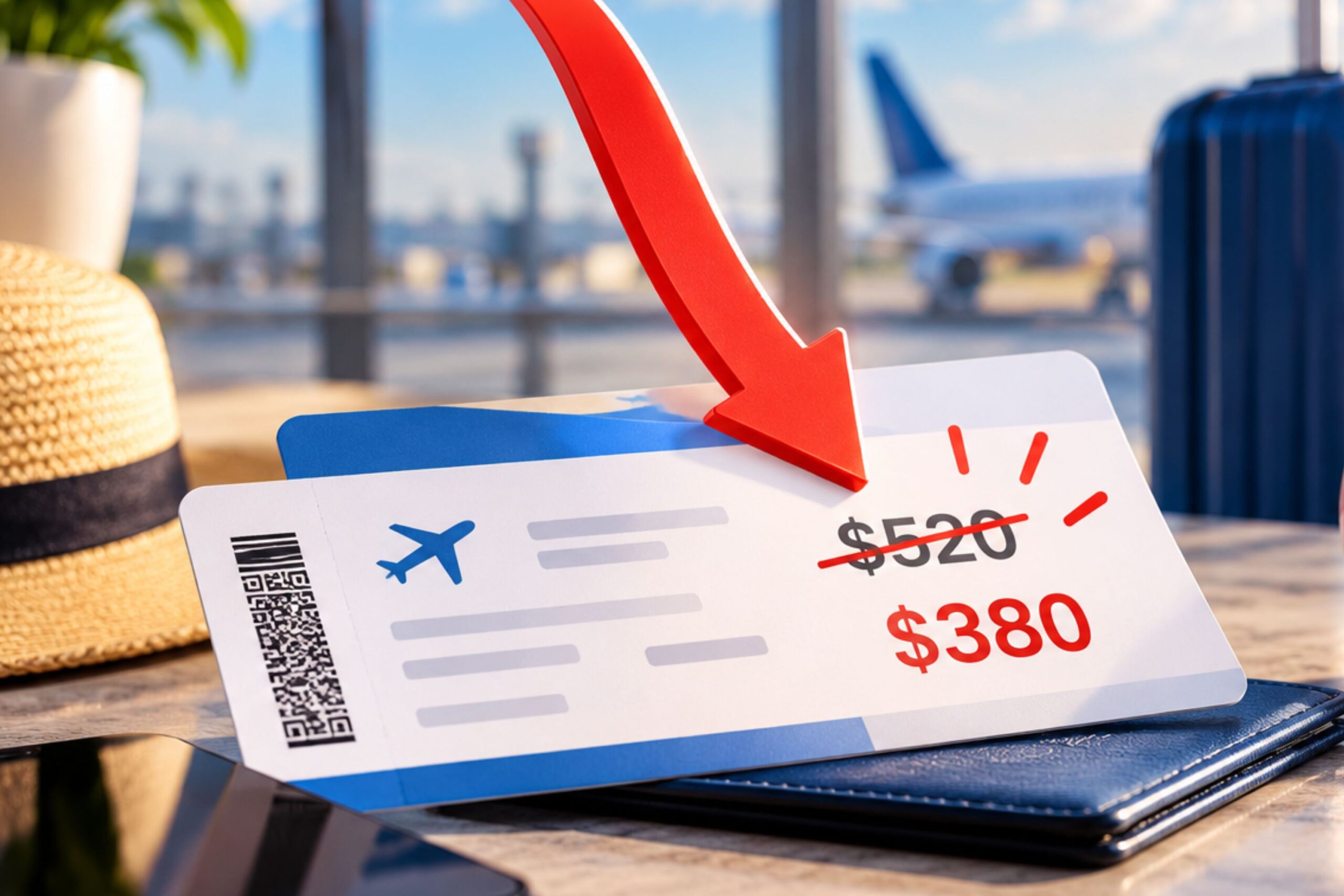

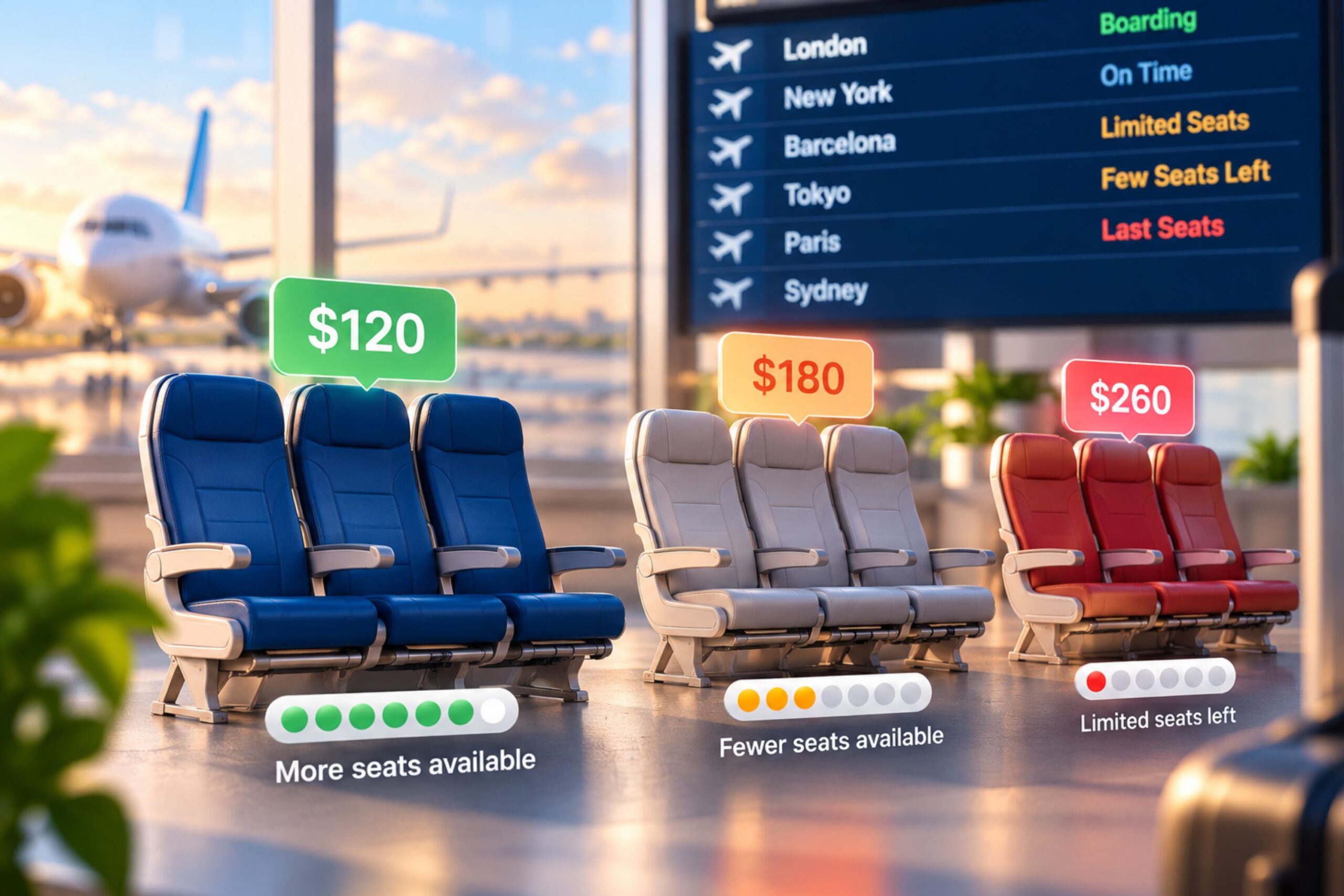
Flight availability affects ticket prices because airlines manage seats across different fare levels, and the cheapest fares may be available only in limited quantities. As those fares sell out, passengers may need to pay more for the remaining seats, even when the aircraft is far from full.
Airlines consider several factors when setting fares, including booking demand, the time remaining before departure, competing offers and the number of seats available at each price level. The relationship between availability and price is therefore not as simple as counting empty seats.
A flight with many empty seats can still have expensive tickets, while another flight with fewer seats remaining may offer a lower fare. Price depends on available fares and the airline’s pricing decisions, not just the total number of unoccupied seats.
Why Do Flight Prices Increase When Seats Sell?
Airlines often divide seats into fare categories with different prices and conditions. These categories may have limited availability, so passengers searching for the same flight at different times can see different fares.
For example, an airline might offer some economy seats at $120 and others at $165. When the lower-priced inventory is no longer available, the next search may show $165, even if the aircraft still has plenty of empty seats.
Several factors can cause the cheaper fares to disappear:
- Bookings from other passengers: Travellers purchase the remaining seats offered at lower fare levels.
- Changes in demand: The airline adjusts prices as booking activity changes.
- Fare inventory updates: The booking system makes different fare categories available as inventory changes.
- Departure timing: The airline may price remaining seats differently as departure approaches.
A higher fare does not necessarily mean the flight is nearly full. It may mean that the lower-priced fare category has sold out or is no longer being offered.
Does a Flight With Fewer Available Seats Always Cost More?
No. A flight with fewer available seats does not always cost more than a flight with many seats remaining. Airlines set prices based on demand, route competition, departure dates, booking patterns, and fare inventory.
Consider two flights on the same route. The first departs on a popular Friday evening and has relatively few seats left. The second departs on a Tuesday afternoon and has more availability. The Friday flight may cost more because more travellers want to fly then.
However, an airline may lower fares on a flight with limited remaining inventory if demand is weaker than expected or it changes its pricing strategy. Seat availability alone cannot reliably predict the next price movement.
When comparing flights, look at the fare, departure time, journey duration, baggage allowance and change conditions rather than using the number of available seats as the only deciding factor.
How Airline Fare Classes Affect Ticket Prices
Airline fare classes determine how seats are sold at different prices and under different conditions. Sometimes called booking classes or fare buckets, they don’t always match the cabin shown on a booking website.
For example, passengers travelling in economy class may pay different amounts for seats in the same cabin. One fare may have stricter change conditions or exclude checked baggage, while another may offer more flexibility.
The price difference can reflect both availability and ticket conditions. If a cheaper fare category is no longer available, the booking system may show a higher fare even if the passenger still selects an economy seat.
When comparing fares, check:
- Whether checked baggage is included.
- Whether you can change your travel dates.
- Whether cancellation is permitted and what fees apply.
- Whether seat selection costs extra.
- Whether the fare is refundable or non-refundable.
A higher fare is not automatically better value. Compare the total cost and conditions to identify the option that suits your trip.
How Demand and Flight Availability Work Together
Airline pricing responds to both seat inventory and demand. A flight with many available seats can become more expensive if bookings increase quickly, while a flight with fewer seats remaining may still have competitive fares if demand is weak.
Demand can vary according to:
- Travel dates: Public holidays, school breaks and major events can increase demand.
- Departure times: Popular morning, evening or weekend flights may attract more bookings.
- Route popularity: Routes with strong business or leisure demand may have higher fares.
- Competition: Other airlines serving the same route can influence available prices.
- Time before departure: Airlines may change prices as they assess expected bookings and remaining inventory.
These factors interact rather than operate independently. This is one reason dynamic pricing for airlines can change prices even when a flight’s overall seat availability appears unchanged.
Why the Same Flight Can Have Different Prices on Different Dates
A flight’s price can vary significantly across dates because airlines forecast different levels of demand for each departure. A route may be affordable on a Wednesday but more expensive on Friday, even when both flights have similar availability.
The same pattern can occur across seasons. Flights during peak holiday periods may attract stronger demand, while departures in quieter periods may offer lower fares.
If your schedule allows flexibility, compare nearby departure and return dates instead of focusing on a single option. Flight ticket prices with flexible dates can help you identify dates when the same route costs less.
A lower fare on another day may mean a longer connection, a less convenient departure time, or different baggage conditions, so compare the full itinerary before deciding.
Can You See How Many Seats Are Left on a Flight?
Sometimes booking websites show limited-availability messages, but they don’t always reveal the exact number of empty seats on the aircraft. A message such as “only a few seats left at this price” may refer to the number of seats available at a particular fare rather than the total number of unoccupied seats.
Airlines may also hold inventory for operational reasons, manage seats across booking channels or update availability as reservations change. The seat map is not a reliable count of all unsold seats because some passengers may not have selected seats and some seats may be blocked.
Treat availability messages as an indication of the fare or booking conditions being shown, not a guarantee that the aircraft is almost full. If you see a fare that fits your budget and travel requirements, compare it with other options rather than relying on seat counts.
How to Check Flight Availability Before Booking
Compare fares and availability on the airline’s website and reputable booking platforms. This helps you confirm the price is still available and see whether another provider offers a comparable itinerary.
Use these steps:
- Search the exact route and dates. Keep the airports, passenger count, cabin and travel dates consistent.
- Compare the same flight. Check the flight number, departure time, connections and journey duration.
- Review the fare conditions. Confirm baggage, seat selection, changes and cancellation terms.
- Check the final price. The price shown in search results may change before payment if availability updates.
- Compare alternative departures. Nearby dates or different times may offer a better fare.
- Verify with the airline or booking provider. Confirm the final price and ticket conditions before paying.
Flight comparison sites can help you compare available itineraries across providers.
Should You Book When Fewer Seats Are Available?
Limited availability can be a reason to review a fare promptly, but it doesn’t guarantee the price will rise. The remaining seats may be offered at higher fare levels, or the airline may later change its prices if demand develops differently than expected.
Your decision should depend on the current fare, your travel dates and how much flexibility you have. If the price fits your budget and the itinerary meets your needs, waiting solely for a lower fare carries risk. If your dates are flexible, compare alternative departures before committing.
You can also use flight price tracking to monitor fare changes. Price alerts help you notice changes, but they cannot guarantee a fare will remain available or predict when it will change.
FAQs
Does booking a seat reduce the number of cheaper tickets available?
It can. When a passenger purchases a seat from a limited lower-priced fare category, that inventory may no longer be available to the next customer. The booking system may then offer a higher fare, although the exact process varies by airline.
Can an airline add more cheap seats after a fare sells out?
An airline may change its inventory or pricing and make a lower fare available again, but this is not guaranteed. Availability depends on the carrier’s commercial decisions, demand forecasts and booking conditions.
Does choosing a seat on the seat map reserve the ticket?
No. Viewing or selecting a seat on a seat map does not necessarily reserve it until the booking process confirms the reservation. On many booking platforms, seat selection and ticket purchase are separate steps.
Why do two passengers pay different prices for the same flight?
They may have booked at different times or purchased tickets under different fare conditions. One ticket may include baggage or flexible changes, while another may have stricter restrictions. Even with the same itinerary, fare inventory can change between bookings.
Can a flight become cheaper as the departure date approaches?
Yes, but it is not predictable. An airline may lower fares if bookings are weaker than expected, while strong demand or limited lower-fare inventory can push prices higher. No universal rule says waiting until close to departure will produce a cheaper ticket.