
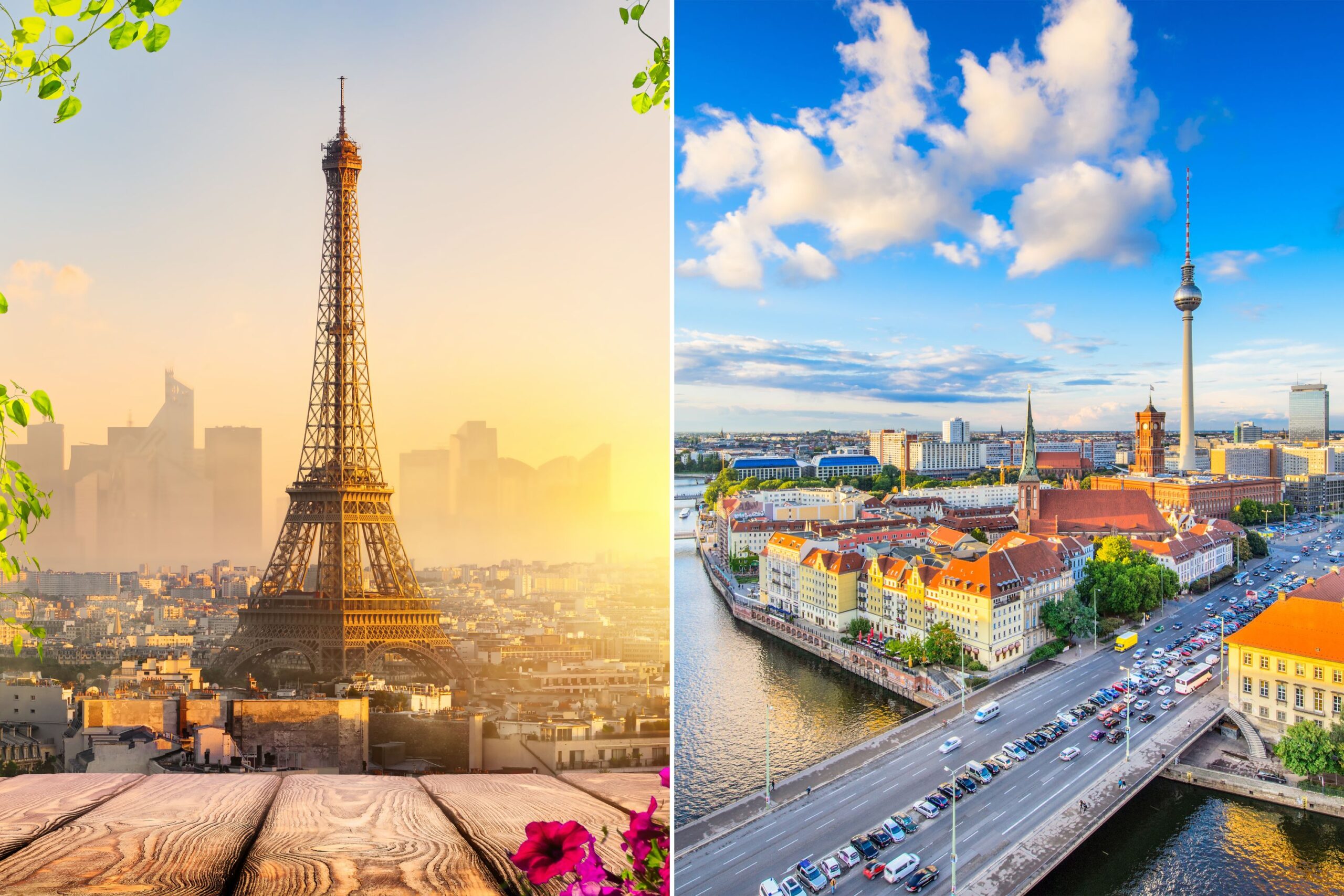
A direct flight from France to Germany usually takes 1 to 2 hours, depending on the departure and arrival cities. For example, a flight from Paris (CDG or ORY) to Berlin (BER) averages about 1 hour 45 minutes, while shorter routes like Paris to Frankfurt or Lyon to Munich can take just 1 hour 15 minutes.
If your itinerary includes a connecting flight, the total travel time may be 3–5 hours, depending on layovers and airport transfer times. Most flights between the two countries are operated by major European carriers, including Lufthansa, Air France, Ryanair, and easyJet, with frequent daily departures.
Because both France and Germany are part of the Schengen Area, there are no passport checks for most travelers during direct flights, making the journey quick and convenient. The best way to minimize travel time is to choose non-stop routes from major airports like Paris Charles de Gaulle, Frankfurt, Munich, or Berlin Brandenburg.
Distance and Flight Duration from France to Germany
The distance between France and Germany varies depending on the specific departure and arrival cities. On average, the aerial distance between Paris, France, and Berlin, Germany, is approximately 878 kilometers (546 miles). However, many flights connect other major cities such as Marseille, Lyon, or Frankfurt, which can slightly alter the overall distance.
In terms of flight duration, a non-stop flight from Paris to Berlin usually takes around 1.5 to 2 hours. Keep in mind that this duration is an estimate and may be affected by factors such as wind speed and direction, air traffic, and the specific flight path chosen by the airline.
What Influences Flight Duration from France to Germany
Several factors contribute to the total time it takes to fly from France to Germany:
- Flight Route: The chosen flight path can impact travel time. Some flights might take a more direct route, while others could have layovers or connect through different cities, adding to the overall journey time.
- Aircraft Speed: The aircraft’s speed, typically measured in knots, affects flight duration. Modern commercial jets are designed to cover longer distances in shorter times, helping reduce travel time.
- Wind and Weather Conditions: Wind patterns and weather conditions can either aid or hinder flight progress. Tailwinds can boost an aircraft’s speed, while headwinds can slow it down. Severe weather can lead to flight delays or diversions.
- Airport Procedures: The time spent on the ground for procedures such as boarding, taxiing, and takeoff can vary from airport to airport. Busier airports might experience longer waiting times due to air traffic congestion.
- Layovers: If you’re taking a connecting flight, the duration of layovers can significantly impact your total travel time. Layovers can range from a short hour to several hours, or even overnight stays.
With a relatively short flight time of 1.5 to 2 hours for nonstop flights, travelers can easily explore the attractions and experiences both countries have to offer.
However, it’s important to remember that while the flight itself might be brief, factors such as airport procedures, flight paths, and weather conditions can affect the overall journey time.
Regardless of these variables, the convenience of air travel ensures that the adventure from France to Germany begins promptly and efficiently, leaving you more time to soak in the wonders of your chosen destination.
FAQs
1. How long is the average flight from France to Germany?
Most direct flights between France and Germany take 1 to 2 hours, depending on the specific cities. For instance, Paris to Berlin takes about 1 hour and 45 minutes, while Lyon to Frankfurt is closer to 1 hour and 10 minutes.
2. Which airlines fly from France to Germany?
Popular airlines offering regular routes include Air France, Lufthansa, easyJet, Ryanair, and Eurowings, with multiple daily flights between major cities such as Paris, Frankfurt, Munich, and Berlin.
3. Are there non-stop flights from Paris to Berlin?
Yes, several airlines operate non-stop flights from Paris Charles de Gaulle (CDG) and Orly (ORY) to Berlin Brandenburg (BER) daily, taking under two hours.
4. How much does a flight from France to Germany cost?
Prices vary depending on the season and how early you book. Budget airlines can offer one-way tickets starting at €40–€80, while full-service carriers may charge €150 or more, especially during peak travel times.
5. Do I need a passport to fly from France to Germany?
If you are a citizen of a Schengen Area country, you do not need a passport—just a valid ID card. Travelers from outside the Schengen zone must carry a valid passport and visa (if required).
6. What is the fastest way to travel between France and Germany?
Flying is the fastest option, but the high-speed train (TGV or ICE) is also popular for short routes like Paris–Frankfurt or Paris–Stuttgart, taking about 3-4 hours.
7. What airports are most commonly used for flights between the two countries?
In France: Paris Charles de Gaulle (CDG), Orly (ORY), Lyon (LYS), and Marseille (MRS).
In Germany: Frankfurt (FRA), Munich (MUC), Berlin Brandenburg (BER), and Düsseldorf (DUS).
8. How early should I arrive at the airport for a France–Germany flight?
Since these are short international flights within the Schengen Area, arriving 1.5 to 2 hours before departure is usually sufficient for check-in and security.
9. Are there luggage restrictions for flights from France to Germany?
Yes, most airlines follow standard European short-haul baggage policies: one cabin bag and one personal item. Checked luggage usually costs extra on low-cost carriers like Ryanair or easyJet.
10. What is the best time to book flights from France to Germany?
For the lowest fares, book 4–8 weeks in advance. Midweek flights (Tuesday–Thursday) are often cheaper than weekend departures, and early-morning or late-night flights are often more affordable.
11. Can I book a same-day flight from France to Germany?
Yes, many airlines offer same-day departures between major cities like Paris, Munich, and Berlin. However, last-minute prices tend to be higher, so booking a few days ahead can save money.
12. Is it cheaper to fly or take the train from France to Germany?
Generally, budget airlines such as Ryanair or easyJet are cheaper than trains, especially when booked early. However, TGV and ICE trains can be more convenient for shorter distances and direct city-center connections.
13. How far is the flight distance between Paris and Berlin?
The distance between Paris and Berlin is about 880 kilometers (547 miles), and the flight typically takes 1 hour and 45 minutes.
14. Are flights from France to Germany usually on time?
Yes. These are short-haul European routes with strong punctuality records. Most delays are under 30 minutes, particularly on established airlines like Air France and Lufthansa.
15. Do flights from France to Germany include in-flight meals?
Most low-cost carriers sell snacks and drinks on board, while full-service airlines such as Air France and Lufthansa often include light refreshments depending on the route and ticket class.
16. Can I use euros on both sides of the trip?
Yes, both France and Germany use the euro (€), so you won’t need to exchange currency when traveling between the two countries.
17. Is Wi-Fi available on flights between France and Germany?
Some airlines, including Lufthansa and Air France, offer in-flight Wi-Fi on select aircraft. Low-cost carriers rarely do, so it’s best to check in advance if you need internet access.
18. Which French cities have direct flights to Germany besides Paris?
In addition to Paris, cities such as Lyon, Marseille, Toulouse, Bordeaux, and Nice offer direct flights to German destinations including Frankfurt, Munich, Hamburg, and Düsseldorf.
19. What is the most scenic route to fly between France and Germany?
Flights between Nice and Munich, or Strasbourg and Berlin, are known for their beautiful views of the Alps, making them among the most scenic air routes in Europe.

