

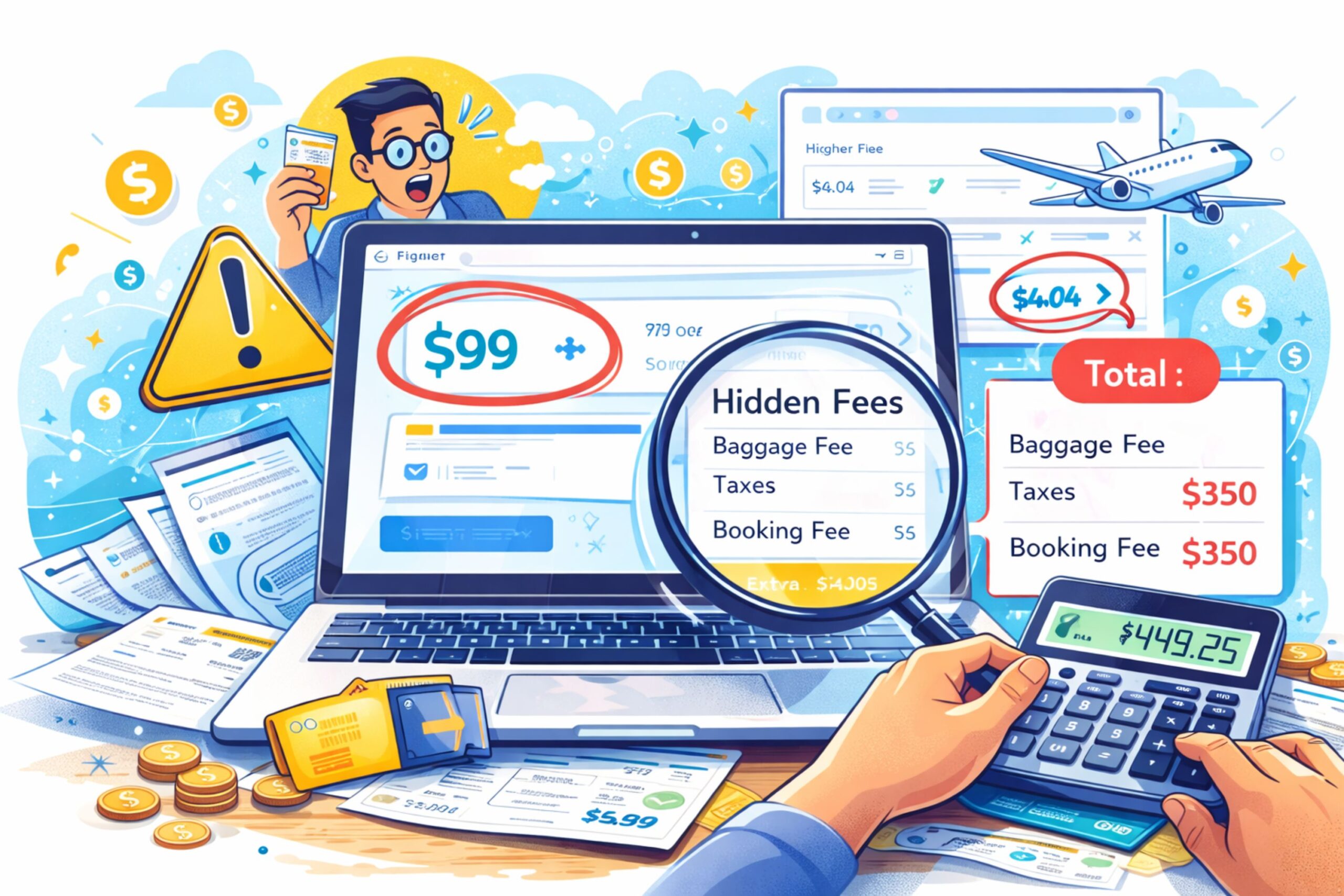
Fake “cheap flight” prices usually appear when airlines, online travel agencies, or third-party platforms display a low base fare that does not include mandatory taxes, baggage fees, seat selection costs, or payment surcharges. Travelers can identify misleading flight prices by checking the full fare breakdown, verifying fare class rules, comparing final checkout totals across platforms, and confirming baggage and airport fees before entering payment details.
Understanding how fake cheap flight prices are structured helps travelers avoid unexpected charges, compare real ticket pricing accurately, and book flights with full cost transparency rather than reacting to a headline fare.
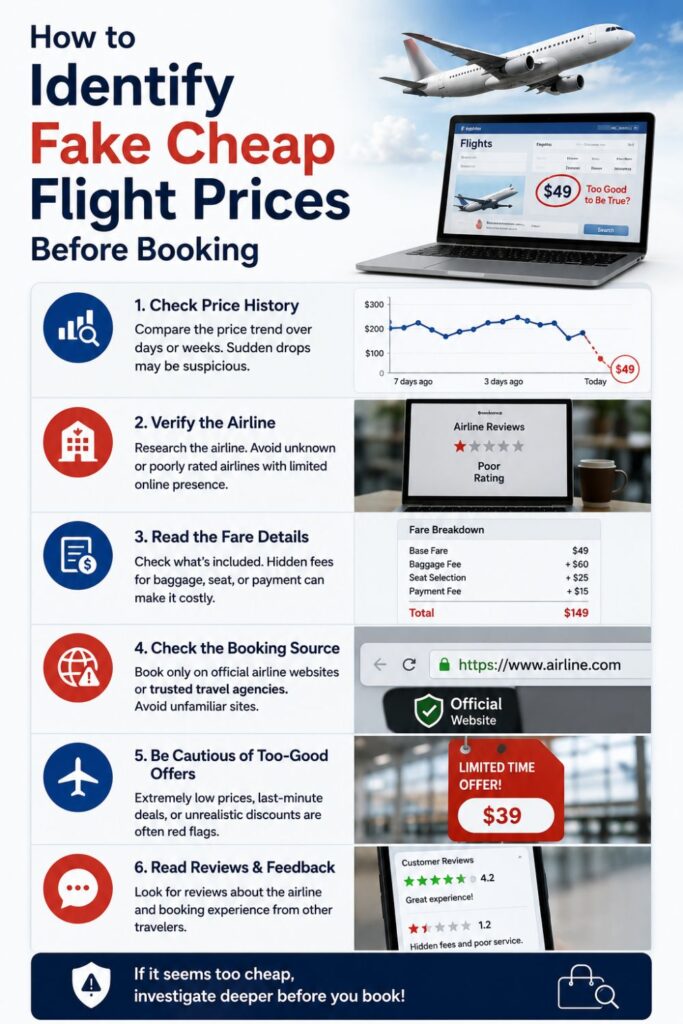
Why Fake Cheap Flight Prices Appear in Search Results
Fake cheap flight prices appear because some platforms highlight the lowest possible base fare before mandatory and optional costs are included. The initial search result may show only the airfare component, while government taxes, airport fees, and service charges are added later.
Airline pricing systems separate fare components into base fare, carrier-imposed surcharges, and taxes. This structure allows platforms to display a low starting price even though the final payable amount is higher.
Understanding what is dynamic pricing for airlines helps explain why ticket prices change in real time and why the displayed fare may not reflect the complete cost until checkout. Low-cost carriers often unbundle services. The initial fare may include only transportation, while baggage, seat selection, and boarding priority are priced separately.
How Base Fare Differs from the Total Ticket Price
The base fare is the airline’s core transportation cost before taxes and additional services. The total ticket price includes mandatory government taxes, airport fees, and any selected services.
Some platforms display the base fare prominently in search results. However, airport security charges, passenger service fees, and fuel surcharges are compulsory and increase the final amount.
When evaluating a cheap flight, expand the pricing details to confirm:
- Government taxes
- Carrier surcharges
- Booking service fees
- Payment processing costs
If the final checkout price increases significantly compared to the advertised fare, the offer is not truly cheap.
How Booking Fees and Platform Charges Increase the Final Flight Price
Some third-party agencies advertise competitive fares but add service fees during checkout. These charges may not appear in the initial search results.
Additional costs can include:
- Booking service fees
- Credit card processing fees
- Currency conversion markups
- Platform administration charges
Understanding what is a ticket booking fee helps travelers recognize when a lower displayed fare becomes more expensive after agency charges are applied. Comparing the final payable amount directly on the airline’s website reduces the risk of hidden markups.
How Baggage Policies Create Artificially Low Ticket Prices
Many cheap flight prices exclude checked baggage and sometimes even cabin baggage beyond a small personal item. The advertised fare may only cover seat transportation.
If a traveler adds:
- Cabin luggage
- Checked baggage
- Priority boarding
- Seat selection
The total price may increase substantially.
Reviewing what airlines charge extra for helps clarify which services are not included in the base fare. You should always add expected baggage during the comparison stage. Comparing a baggage-free fare to a standard fare produces inaccurate conclusions.
Why the Same Flight Has Different Prices on Different Websites
The same flight can appear at different prices because airlines distribute fare classes differently across platforms, and some agencies apply additional service fees.
Price differences may result from:
- Limited seat inventory in lower fare classes
- Platform-specific booking fees
- Currency exchange rates
- Delayed tax inclusion
Understanding why the same flight has different prices on different websites helps travelers evaluate whether the cheaper option truly offers a lower total cost. Always compare identical fare classes with identical inclusions before deciding.
Real Booking Example: When a Cheap Fare Is Not the Lowest Total Cost
A traveler searching for a round-trip flight sees a $280 fare on a third-party website. The airline website shows $325 for the same itinerary.
At checkout, the third-party platform adds:
- $35 booking fee
- $45 checked baggage fee
- $15 card processing surcharge
The final cost becomes $375.
On the airline website, the $325 fare includes one checked bag and no booking fee. The airline ticket becomes cheaper in total, even though the initial price appears higher.
This situation often relates to airline competition and flight ticket prices, where fare distribution and route competition influence displayed pricing.
How Airport Choice Can Make a Cheap Flight More Expensive
Some cheap fares depart from secondary airports located far from city centers. While the airfare may appear lower, ground transportation can increase the total travel cost.
For example:
- Longer train transfers
- Additional taxi expenses
- Extra travel time
Evaluating which airport is more economical, similar to comparing which airport is cheaper in London, helps determine the real cost beyond the ticket price.
Always calculate full travel expenses, not just airfare.
How to Compare Cheap Flight Prices Accurately
To identify fake cheap flight prices, use a structured comparison process.
- Search on a flight comparison site.
- Select the preferred itinerary.
- Open the offer on both the airline website and the third-party platform.
- Add identical baggage and seat options.
- Review the final total before payment.
Using guidance on how to use flight comparison sites improves fare comparison accuracy and prevents misleading conclusions. The key is to compare final payable totals under identical conditions.
Common Mistakes When Evaluating Cheap Flight Prices
Focusing Only on the Headline Fare
The displayed price in search results often excludes optional and mandatory charges. Always verify the full breakdown.
Ignoring Fare Class Restrictions
Basic economy fares may restrict changes and refunds. Understanding fare conditions prevents higher costs later.
Not Reviewing Refund Policies
If a ticket is non-refundable, cancellation may result in losing the entire fare. Reviewing refund rules avoids unexpected losses.
Skipping Payment Fee Checks
Some platforms charge extra depending on the selected payment method. Confirm payment terms before completing the booking.
How to Book Flights with Price Transparency
To avoid fake, cheap flight prices:
- Always expand the fare details
- Add baggage before comparing prices
- Compare airline website totals with agency totals
- Review booking fees and payment charges
- Confirm fare class rules
- Evaluate airport location costs
Booking decisions should be based on the total payable amount, not the promotional fare shown in search results.
A ticket that appears slightly higher initially may offer better value when all services are included.
Checklist to Avoid Fake Cheap Flights Before Booking
- Confirm total price, including taxes and mandatory fees
- Add baggage and seat selection before comparing totals
- Compare identical fare classes across platforms
- Check for booking service fees and payment surcharges
- Review refund and change policies
- Evaluate airport transfer costs
- Compare final checkout totals on multiple platforms
- Select the option with the lowest true total cost
This checklist ensures that the selected flight reflects the actual cost of travel rather than a misleading promotional price.
FAQs
How can I tell if a “cheap flight” price includes all mandatory taxes?
To verify if a cheap flight includes mandatory taxes, review the fare breakdown section before entering passenger details. A transparent fare should clearly separate base fare, government taxes, airport charges, and carrier surcharges. If taxes only appear at the final payment stage, the advertised price is incomplete.
Are flash sales and promo fares usually real or misleading?
Flash sales can be legitimate, but they often apply only to limited fare classes with strict conditions. Availability may be restricted to specific travel dates or routes. Always verify seat inventory and fare rules to confirm that the promotional price is actually bookable.
Why do some cheap flights disappear when I try to book them?
Cheap fares may disappear because lower fare classes have limited seat inventory. Airline reservation systems update availability in real time, and once discounted seats sell out, the system automatically moves to a higher fare class. This is not always misleading, but it can create the impression of a fake low price.
Do currency conversions affect the final flight price?
Yes. Some platforms display prices in a foreign currency and apply their own exchange rate at checkout. The conversion rate used by the platform may differ from your bank’s rate, increasing the final ticket price. Always confirm the billing currency before payment.
Can flexible date searches reduce the risk of misleading fares?
Flexible date searches help identify consistent pricing patterns instead of isolated low fares. If only one specific departure time shows an unusually low price, it may reflect limited inventory rather than a sustainable deal. Reviewing surrounding dates improves price transparency.
How do fare rules reveal hidden restrictions in cheap tickets?
Fare rules specify change fees, refund eligibility, baggage inclusion, and boarding conditions. Reviewing fare rules before booking helps identify whether a low ticket price compensates for heavy restrictions that may increase costs later.
Why do some platforms charge more after I enter passenger details?
Certain booking systems add service fees after passenger information is entered because the pricing engine calculates agency commissions and processing costs at that stage. Reviewing the price summary before confirming payment prevents unexpected increases.
Is booking directly with the airline always cheaper?
Booking directly is not always cheaper, but it often provides clearer pricing and fewer third-party fees. Comparing both the airline website and online travel agencies ensures you identify the lowest true total cost for the same itinerary and fare class.
How do layovers impact the real value of a cheap ticket?
Flights with long layovers may appear cheaper but increase indirect costs such as meals, airport transfers, or overnight accommodation. Evaluating total travel time and additional expenses helps determine whether the lower fare provides real value.
Can basic economy fares become expensive after booking changes?
Yes. Basic economy fares often carry high change fees or prohibit modifications entirely. If travel plans change, the cost of rebooking may exceed the difference between basic and standard fares purchased initially.
Why are ultra-low fares often available only on specific routes?
Ultra-low fares usually appear on routes with high airline competition or promotional campaigns. Airlines may reduce prices temporarily to stimulate demand or compete for market share. Once demand increases, prices typically return to standard levels.
How can I confirm that a cheap fare is genuinely available?
To confirm a cheap fare is real, attempt to proceed to the payment stage without adding extras and verify the total cost. If the final price matches the advertised fare and includes mandatory charges, the deal is likely genuine. If the amount increases significantly, the initial price was incomplete.