
The same flight can show different prices on different websites because airlines distribute tickets through multiple sales channels that access different fare inventories, apply separate service fees, and update availability at different speeds. Airlines use automated pricing systems that constantly adjust fares based on demand, competition, and seat availability.
Why Airlines Allow Different Prices for the Same Flight on Different Websites
Airlines allow different prices for the same flight on different websites because they distribute fares through multiple sales channels that do not access inventory and fare updates in the same way. Each channel — airline website, global distribution system (GDS), or online travel agency (OTA) — may receive different fare buckets, update speeds, and commercial terms.
Airlines sell seats through their own direct booking platforms as well as through third-party reservation systems. These systems connect to central airline inventory but may apply different refresh intervals and pricing logic.
In practice, this means one website may display a lower fare class that is still technically available, while another platform has already updated to reflect that the cheaper inventory is sold out.
Airlines use revenue management software to control seat availability across all channels. The system automatically adjusts ticket pricing based on demand, booking pace, route competition, and remaining seat inventory.
When demand increases, or a lower fare class sells out, the system moves remaining seats into a higher pricing tier. If two websites check availability minutes apart, one may still show the previous fare while the other reflects the updated price.
The variation is not random or manipulative. It reflects automated airline pricing systems operating simultaneously across multiple distribution channels with slight timing and inventory differences.
How Fare Class Inventory Causes the Same Flight to Show Different Prices
The same flight shows different prices on different websites because each aircraft seat is assigned to a specific fare class, and those fare classes have separate prices, rules, and limited inventory. When a lower fare class sells out, the system automatically moves the next available seats into a higher price tier.
Within the economy cabin alone, airlines may create multiple booking codes such as basic economy, standard economy, and flexible economy. Each tier has different fare conditions, baggage allowance, seat selection rights, and change or cancellation policies.
If one website displays a lower price, it may still be pulling availability from a cheaper fare bucket that has only a few seats remaining. Another platform may have already refreshed its inventory and is now showing the next pricing level.
Understanding how a low fare flight is structured helps travelers recognize that the lowest visible fare often comes with stricter restrictions, limited carry-on or checked baggage, and higher change penalties.
In most cases, price differences are driven by fare class availability and booking code allocation rather than intentional overpricing by a specific website.
How Booking Fees and Platform Charges Create Different Prices for the Same Flight
The same flight can have different final prices because booking platforms apply different fee structures on top of the airline’s base fare. While airlines often sell tickets directly without third-party commissions, online travel agencies may add service-related costs that increase the total checkout price.
Airline websites typically generate revenue from ticket sales and ancillary services such as baggage or seat upgrades. In contrast, third-party platforms rely on commissions, transaction fees, or bundled services to remain profitable.
Some booking platforms include:
- Booking service fees
- Payment processing markups
- Foreign transaction margins
- Optional add-ons automatically selected during checkout
These additional costs are commonly classified as a ticket booking fee, and they can create visible price differences even when the underlying flight fare and seat inventory are identical.
Travelers who compare only the initial displayed fare may not see these charges until the final payment stage. For accurate comparison, always evaluate the total payable amount at checkout rather than relying on the headline price shown in search results.
Why Some Websites Show Higher Prices for the Same Flight
Some websites show higher prices for the same flight because their business model requires additional revenue beyond the airline’s base fare. Online travel agencies often operate under commission-based agreements or apply platform markups to cover operational costs, customer support, and payment processing.
Unlike airline websites, which sell tickets directly from their own inventory system, third-party platforms may earn income through service margins, bundled products, or distribution fees negotiated with airlines.
In some cases, agencies include travel insurance, priority support, or rebooking assistance within the displayed fare. This bundled structure explains why some platforms charge higher booking fees compared to booking directly with the airline.
A higher price does not necessarily mean the seat itself is more expensive. It often reflects the platform’s commission structure, value-added services, and checkout fee policy rather than a different airfare.
How Currency and Point-of-Sale Pricing Make the Same Flight Cost Differently
The same flight can display different prices across websites because airlines apply point-of-sale pricing and currency-based adjustments depending on where the ticket is purchased. Billing country, local taxes, and exchange rate calculations directly affect the final amount shown at checkout.
Airlines sometimes segment markets geographically. A ticket sold in one country may be priced differently from the same seat sold in another market due to regional competition, purchasing power strategies, or local regulatory requirements.
Currency conversion also plays a major role. A fare priced in USD may convert differently when displayed in EUR or GBP because platforms use different exchange rate providers and update intervals. Small variations in exchange rates can create noticeable pricing differences, especially on long-haul international tickets.
In addition, payment processors may apply foreign transaction margins when charging an international card. These margins are often added during the final payment stage rather than during the initial fare display.
Before confirming a booking, travelers should verify the billing currency, check whether dynamic currency conversion is applied, and compare the full price in one consistent currency to ensure an accurate comparison across platforms.
Real Booking Example Explaining Why the Same Flight Has Different Prices
The same round-trip flight can show different prices across booking platforms because each website may package the fare differently, apply distinct service fees, or access different fare conditions within the same inventory.
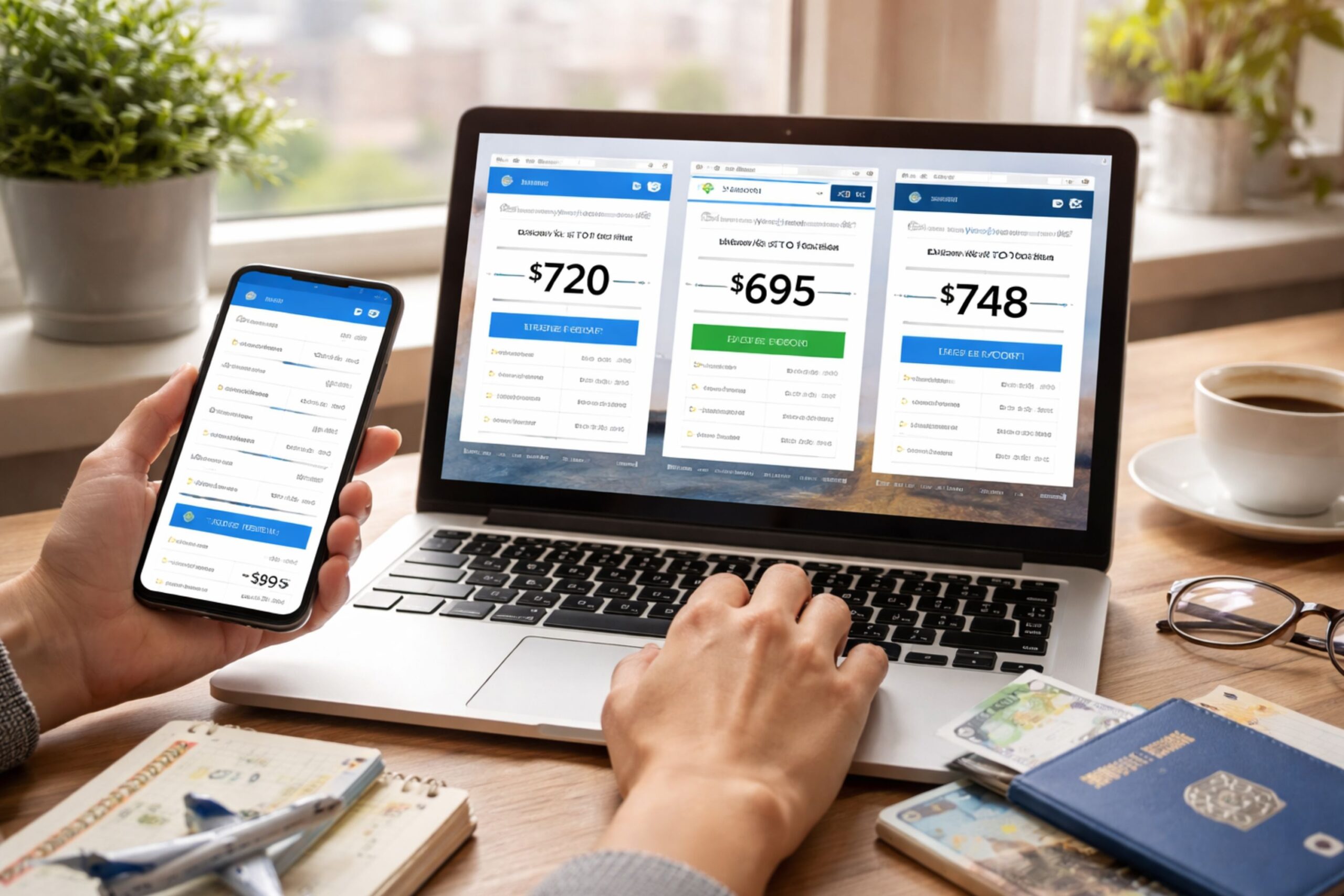
Consider a traveler booking a round-trip flight from New York to Paris. During comparison, they may see:
- $720 on the airline website
- $695 on one online travel agency
- $748 on another booking platform
Although the flight number, departure time, and aircraft are identical, the fare conditions may not be the same.
The $695 option may represent a basic economy fare that excludes checked baggage, limits seat selection, and applies strict change penalties. The $748 listing may include flexible rebooking options, customer support assistance, or bundled services such as insurance.
When comparing these options, it becomes important to evaluate whether to book directly or through a travel agent, particularly if travel dates are uncertain or itinerary changes are possible.
In most cases, the visible price difference reflects variations in fare rules, ancillary inclusions, and platform fee structures rather than differences in the actual seat availability on the aircraft.
How to Compare the Same Flight When Prices Differ Across Websites
When the same flight appears at different prices, the correct comparison must focus on fare structure and booking conditions rather than the displayed headline amount. True price comparison requires verifying identical flight details, fare rules, and total payable cost.
When evaluating options, compare these specific elements:
- Exact flight number and departure time
- Fare class code, not just cabin label (economy, premium economy, business)
- Checked and carry-on baggage allowance
- Change and cancellation rules
- Final checkout total, including taxes and service fees
The fare class code is especially important because two economy tickets may belong to different booking buckets with different flexibility and upgrade eligibility.
Use flight comparison platforms to identify the general price range for your route. After that, confirm the precise fare conditions directly on the airline’s official website before entering payment details.
Do not rely only on the initial search result price. The only valid comparison is the full amount shown at the final checkout stage, including all mandatory taxes, platform fees, and payment processing charges.
Common Mistakes When Comparing the Same Flight on Different Websites
The most common mistake is comparing only the displayed price instead of the full fare structure. Identical flight numbers do not guarantee identical ticket conditions.
Price differences usually result from variations in fare class, baggage rules, booking fees, or flexibility policies. Focusing only on the headline fare can lead to choosing a ticket with stricter restrictions or hidden costs.
Comparing Base Fare Instead of Total Price
Comparing only the base fare leads to inaccurate conclusions because some websites display prices before taxes, airport fees, or service charges are added. The base fare alone does not reflect the actual amount you will pay.
Certain platforms show a low headline price and add mandatory taxes or booking fees during checkout. Others present the full total from the beginning.
Always compare the final payable amount after selecting baggage options, confirming seat selection, and choosing your payment method. The checkout total is the only reliable figure for decision-making.
Ignoring Fare Conditions
Lower ticket prices often come with stricter fare rules, including limited changes, no refunds, or additional charges for seat selection and baggage.
Two tickets in the same cabin class can differ significantly in flexibility. A slightly higher fare may allow date changes or partial refunds, reducing financial risk if travel plans change.
Evaluating fare rules alongside price prevents costly surprises after booking.
Booking Without Checking Fare Structure
Selecting the lowest visible price without reviewing fare details can result in unexpected add-on costs later in the booking process.
Fare categories within the same cabin may differ in baggage allowance, boarding priority, mileage earning, and upgrade eligibility.
Reviewing the full fare structure before payment ensures you are comparing equivalent ticket products rather than assuming all listings represent the same travel conditions.
How to Use Different Website Prices to Choose the Same Flight Wisely
Price differences across booking websites should guide a structured comparison, not a quick decision based only on the lowest visible fare. The goal is to identify which option offers the best overall value for your route, not simply the cheapest headline price.
Start by searching across multiple platforms to determine the realistic price range for your departure airport, travel dates, and cabin class. This establishes a benchmark for what the market is currently charging.
Then compare these critical elements:
- Fare class and booking code
- Checked and carry-on baggage inclusion
- Change, cancellation, and refund rules
- Service or checkout fees are added at the payment stage
- Currency display and exchange rate applied
If the price difference between platforms is small, prioritize flexibility, reliable customer support, and clearer fare conditions over minor savings.
If the difference is significant, verify that both options represent the same fare class, identical baggage allowance, and identical ticket rules before proceeding.
Applying this structured evaluation method reduces booking errors, prevents hidden cost surprises, and improves overall decision confidence when selecting flights across different websites.
Checklist for Choosing the Best Price for the Same Flight on Different Websites
Choosing the best price for the same flight requires confirming that all fare conditions, fees, and booking rules are identical before making a payment decision. This checklist ensures you are comparing equivalent ticket products rather than relying only on displayed price differences.
- Confirm the identical flight number, departure time, and operating airline
- Compare the full checkout total, not just the base fare shown in search results
- Verify the exact fare class or booking code within the cabin
- Check baggage allowance, including carry-on and checked baggage rules
- Review change, cancellation, and refund conditions carefully
- Examine added service fees, payment processing charges, or markups
- Confirm the billing currency and exchange rate applied at checkout
- Compare pricing directly on the airline’s official website before finalizing
Use this checklist whenever you see price variations across platforms to ensure you are evaluating the same fare structure and not simply the same flight number.
FAQs
Why does the same flight cost more on mobile apps than on desktop websites?
Some booking platforms use device-based pricing tests to analyze conversion behavior. In certain cases, app-exclusive discounts may apply, while in others, mobile bookings may include convenience fees. Always compare final totals on both devices before completing payment.
Do airlines control the prices shown on third-party websites?
Airlines control base fare distribution through reservation systems, but third-party websites may apply their own margins or service structures. The airline sets fare rules and inventory, while agencies influence the final displayed price through commercial agreements.
Can browser location or IP address affect flight pricing?
Yes. Some platforms use geo-pricing logic that adjusts displayed fares based on the searcher’s region or market demand. Prices may vary due to local taxes, regional competition, or currency display settings tied to your IP address.
Why does the same fare appear sold out on one website but available on another?
Inventory synchronization delays between booking systems can cause temporary mismatches. One platform may refresh seat availability faster, while another still shows cached data from a prior query.
Do airline alliances influence ticket pricing across platforms?
Airline alliances can affect codeshare distribution and seat allocation. A flight marketed by one airline but operated by another may have separate fare buckets, leading to different pricing visibility across booking channels.
Can the payment method influence the final ticket price?
Yes. Certain websites apply surcharges for credit cards, international cards, or installment payments. Debit payments or local payment gateways may produce slightly different totals during checkout.
Why do flight aggregators sometimes redirect to higher-priced options?
Metasearch engines display scraped or cached fares. If availability changes between the search result and redirect stage, the partner booking site may show an updated fare reflecting real-time seat inventory.
Does seat selection inclusion affect the visible ticket price?
Some booking platforms bundle seat selection into the initial fare display, while others charge separately after ticket confirmation. This packaging difference can make the same flight appear more expensive on one site.
Can hidden taxes explain price differences between websites?
Airport taxes and government fees are fixed, but how platforms display them varies. Some include all mandatory taxes upfront, while others break them down later in the booking flow.
Do airline promotional codes apply equally across all platforms?
No. Promo codes often apply only on airline-operated websites. Third-party platforms may not support airline discount codes, creating pricing gaps.
Why does the final charge on my bank statement differ slightly from the booking price?
Minor differences may result from foreign exchange rate fluctuations between booking time and settlement time, especially for international transactions.
Can loyalty program status affect displayed flight prices?
Elite status may unlock discounted fares or additional bundled benefits when booking directly through the airline’s platform. Third-party websites typically do not factor loyalty tier benefits into their displayed pricing.